I wander through lands filled with metal mountains originating from the steel production factory of my region– leftover metals resulting from the production of steel… non-valuable at first glimpse, each of the pieces to be found there seems like an artwork for itself when it‘s been given attention and room to shine. My garment creation tries to give this room, incorporating the pieces as accessorial pieces in the closing system of the garment. Being part of the garment, essential for holding it together.
Going side by side with my original textile created from repurposed discarded textiles originating from the salt mine of my region. A place where our forefathers – the celtic people – got their salt from at the very origin, a salt mine was built. The first one in Austria to be using steel tools for salt mining. The salt has a preservative effect revealing the treasures of our past, the history of our ancestors. The old metal tools recovered from the mines are reminiscent of the metal structures and pieces of the steel mountains I have chosen.
The originally white protective clothing worn by visitors to the salt mine has become increasingly stained with rust and patches over time and use, revealing the passage of time like scars. While stains are usually undesirable phenomena, my project aims to draw attention to the beauty that can be found in these colours aged by time. Combined with a clothes deliberately stained through intentional rust colouring and the torching of the materials through the use of fire (reminiscent of steel production), a textile with a special surface structure and colour is created that blends harmoniously with the roughness of the metal parts.
In the search for dyes that do not require harmful chemicals and large amounts of resources, the rust colouring is created using rusting metal tools in a kind of shibori technique.While in conventional shibori the threads used to pull the fabric together are no longer visible at the end of the dyeing process, the metals used to pull the fabric together in my dyeing process are decisive for the colour and pattern and leave their mark over the course of the dyeing process.
All in all resulting in an androgynous reversible workwear-inspired look that focusses on the importance of workers and craftspeople of our past and present.
Material:discarded salt mine protection clothes (cotton), rust dyed and pleated textile (semi-synthetic), metal objects
Photography by YASUNARI KIKUMA / ©︎ FASHION FRONTIER PROGRAM
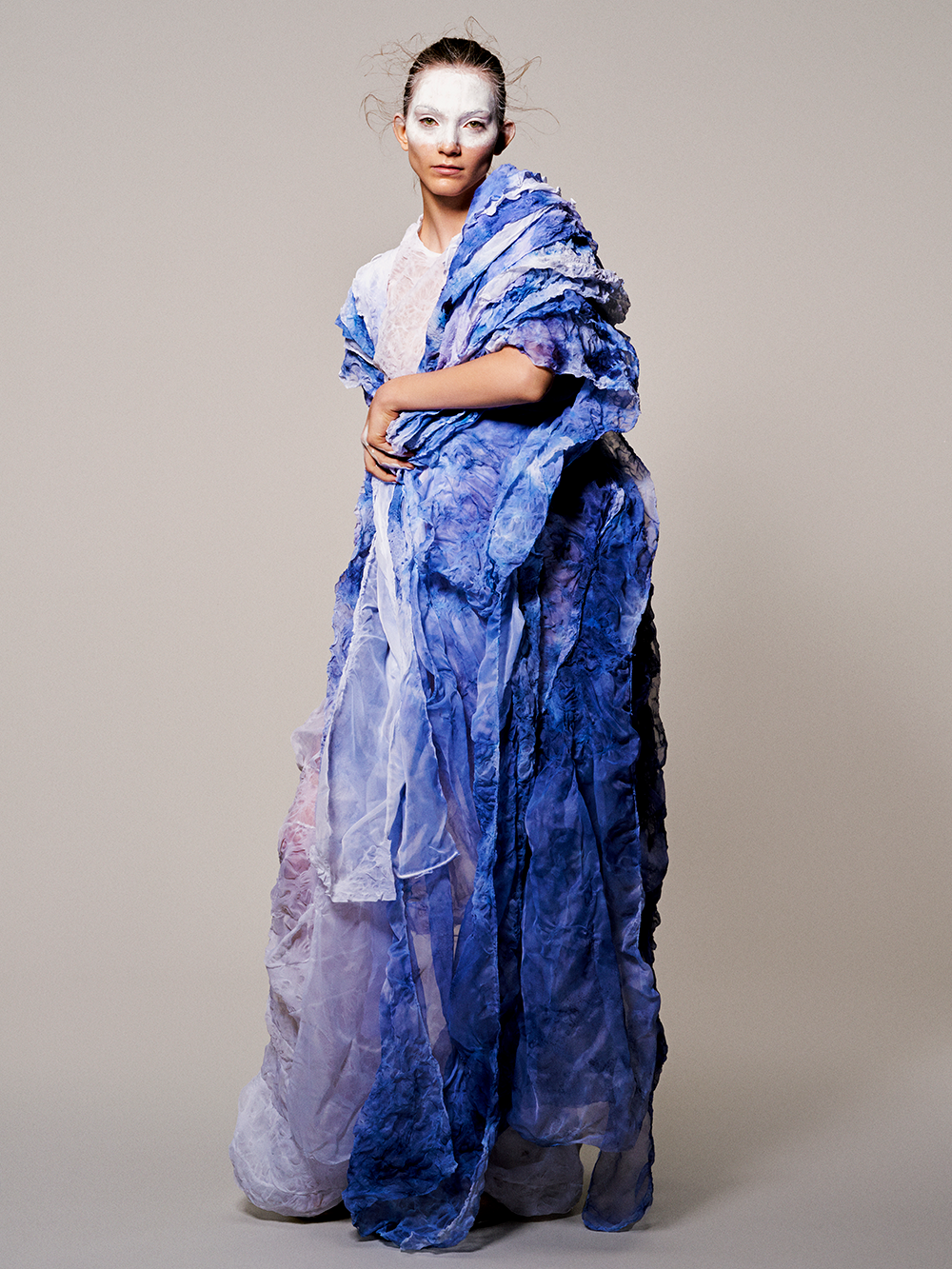
With gratitude for the support to bacteriograph Erich Schopf, the Crafting Futures Lab/University of Arts Linz and the Institute of Polymere Science/Johannes Kepler University Linz.
Material:recycled polyester derived from plastic water bottles, deadstock polyester fabric, stones from the Danube river
Photography by YASUNARI KIKUMA / ©︎ FASHION FRONTIER PROGRAM
E-mail:julia.moser@kunstuni-linz.at
Instagram:@growingpatterns.livingpigments