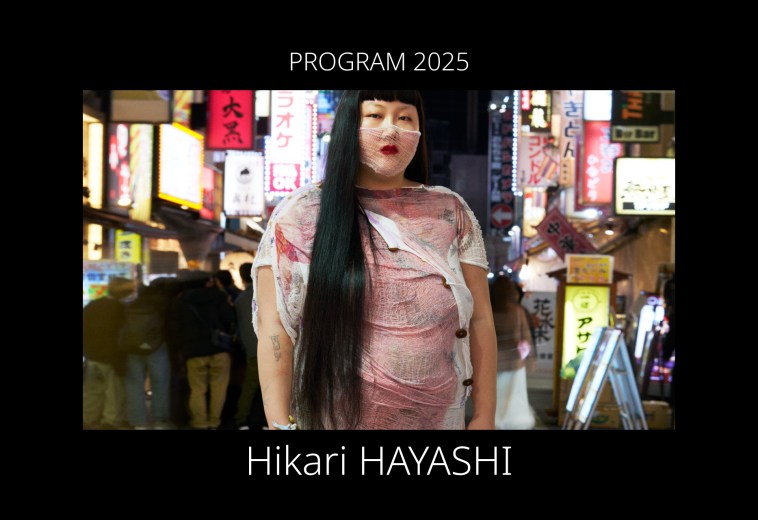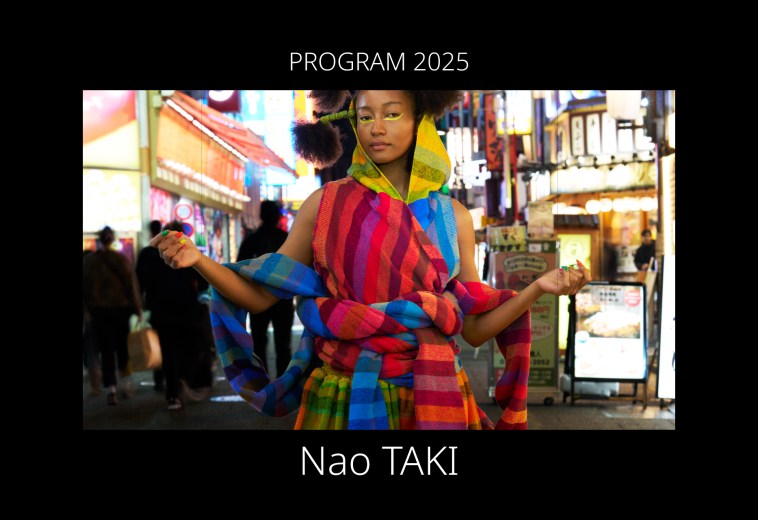
Our ancestors gave form to the unseen — embodying spirits, beliefs, and concepts through crafted objects passed from generation to generation. From the pottery and clay figures of the Jomon period to the ritual implements preserved by the Noro priestesses of Amami Oshima since the Ryukyu Kingdom era, these artifacts stand as evidence of the invisible made tangible.
As a descendant of the Noro lineage, I draw deep respect and inspiration from this ancestral wisdom. My work centers on the indigenous language of Amami Oshima – a distinct Ryukyuan language with seven vowels, a rich cultural heritage now at risk of disappearing.
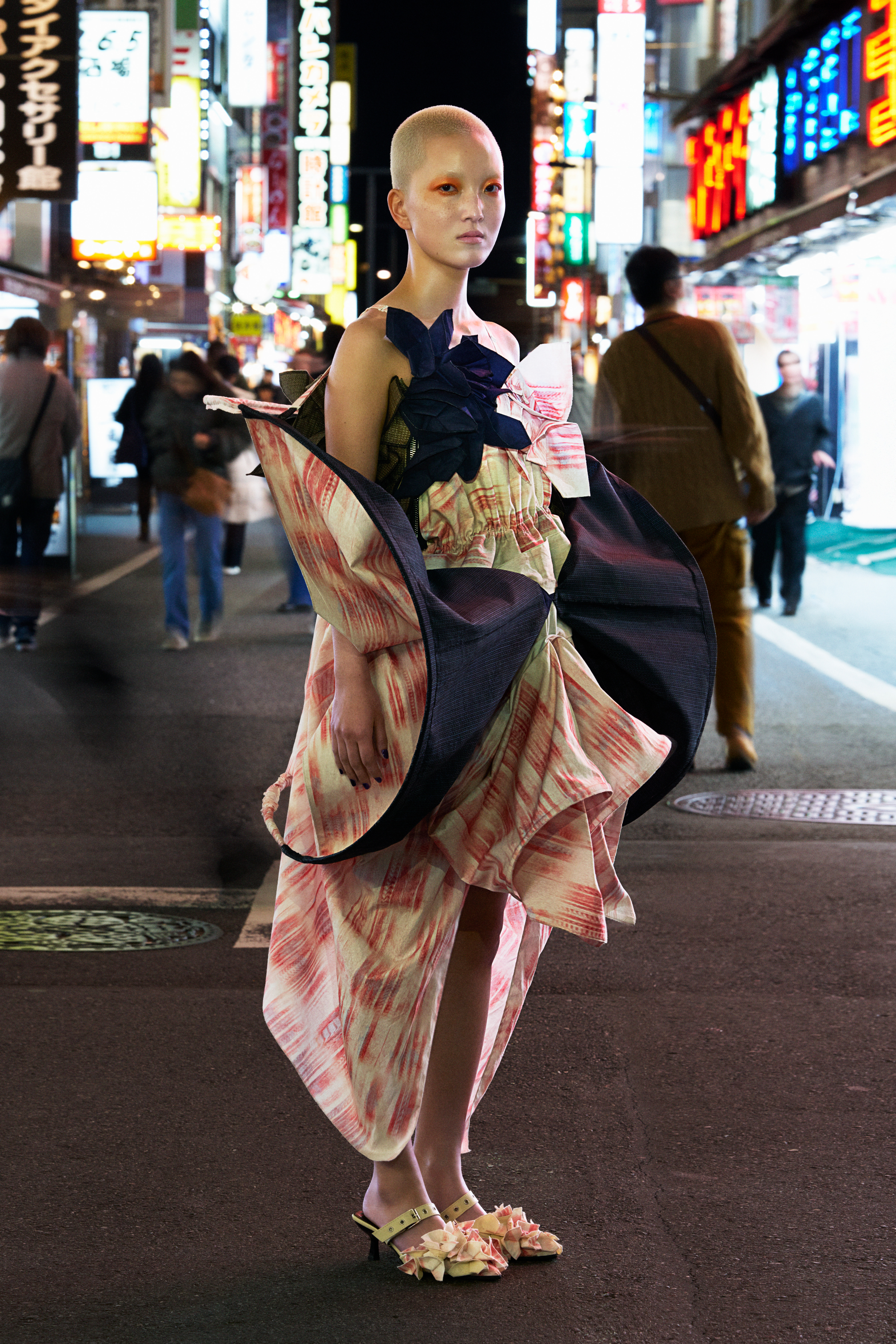
To give this language visual form, I collaborated with Amami linguistic researchers to record and digitize native speakers’ voices. We extracted phonetic characteristics unique to the language — including mouth shape, tongue position, and frequency — and transformed them into spectral graphs. These became the foundation for the textile design.
Using Seiko Epson’s digital printing technology, this linguistic spectrum was translated into textile graphics. In partnership with Hajime Shoji Co., Ltd., artisans of Oshima Tsumugi silk, part of the garment was handwoven on a traditional loom, using Oshima Tsumugi warp threads and a ripple-weaving technique to create a new textile: “Amamifu.”
Just as the Noro once gave shape to sacred knowledge, this work seeks to carry forward the beauty and spirit embedded in language — preserving what cannot be seen, yet must not be forgotten. Through clothing, we allow these voices to continue into the future.
Material: Cotton Lawn Fabric. Oshima Tsumugi Silk Fabric (in Bolt) . Oshima Tsumugi Kimono
Supported by: Seiko Epson Corporation, Hajime Shoji Co., Ltd., Department of Japanese Language and Culture Education, Graduate School of Humanities and Social Sciences, Hiroshima University, Research Fellow, Japan Society for the Promotion of Science
Photography by YASUNARI KIKUMA / ©︎ FASHION FRONTIER PROGRAM
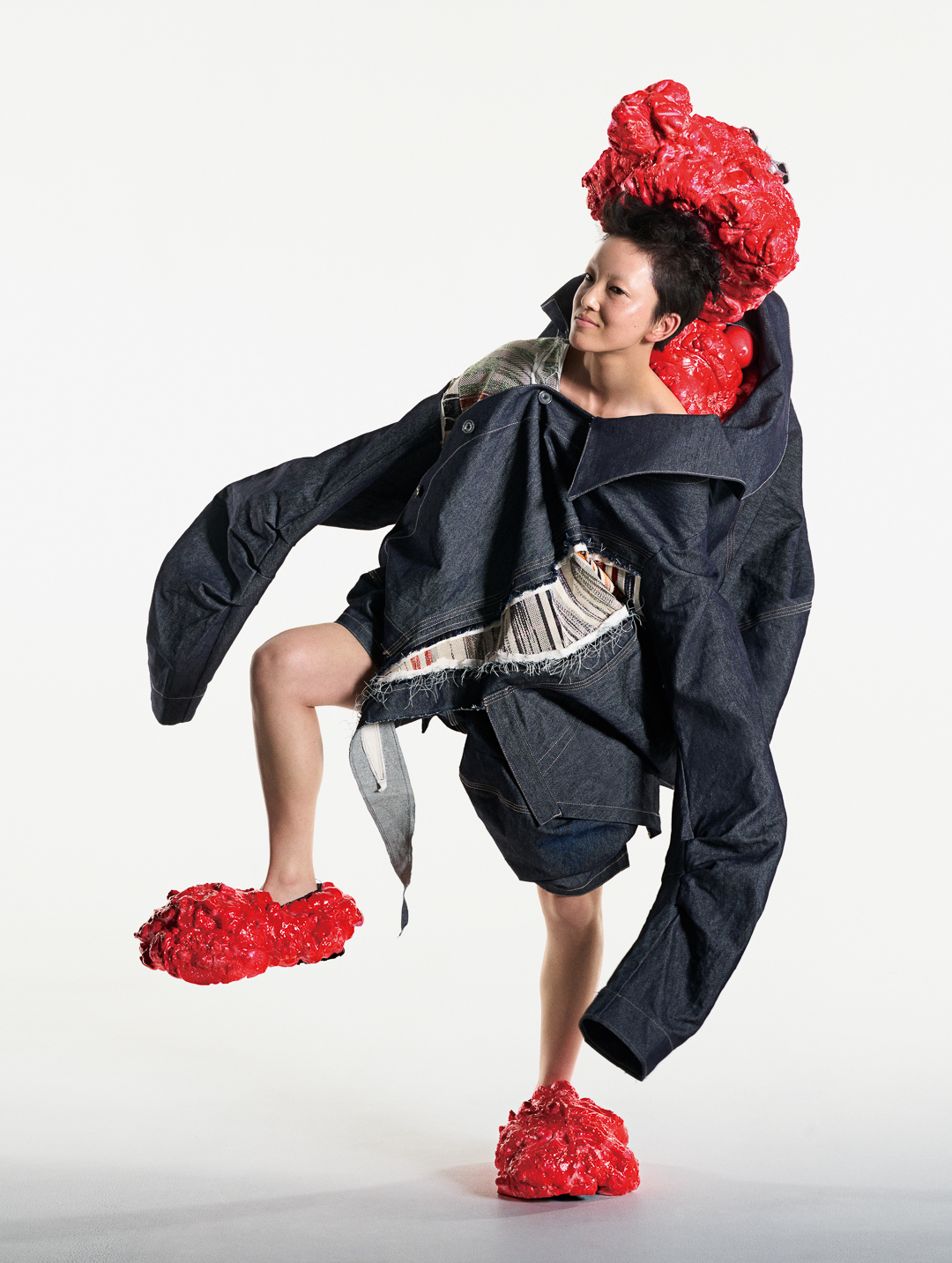
Even now as i’ve grown up, his presence remains strong in my mind, and I focus on the declining culture of Amami Oshima and new uses for sugar cane, and I am creating clothing that has awkward kindness and innocence, based on my island roots and my own identity, with the aim of inheriting and sublimating culture.Because we spend a lot of time with our clothes in our daily lives, I want people to wear them together with yokai (Kemmun). That is what I think yokai (Kenmun) is.
Material:Bagasse paper denim 12.5oz / Bagasse yarn mixed minaori
Photography by YASUNARI KIKUMA / ©︎ FASHION FRONTIER PROGRAM
Instagram:@kiyoshitomiyama_
FFP Artist Management Profile:Kiyoshi Tomiyama
For work inquiries, please contact us at the email address above.
management@ffp-contact.com