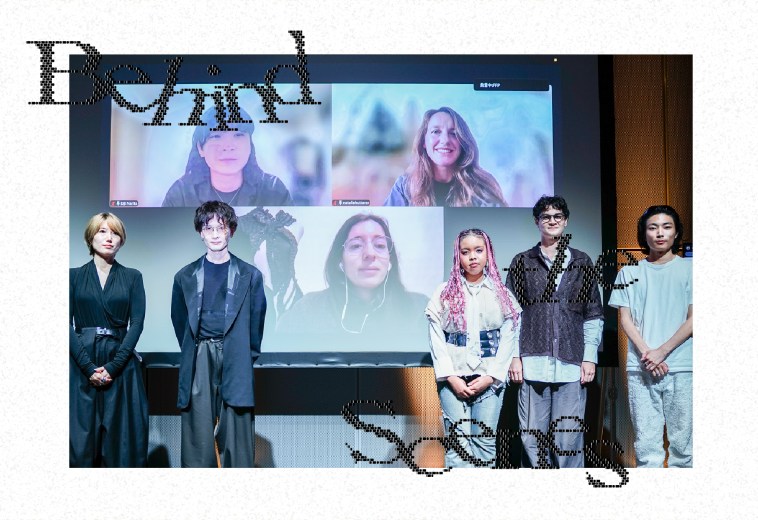
We’re excited to introduce each semi-finalist with their profile, alongside drawings of their work and symbolic images that represent their creations.
Please take a moment to explore the passion behind their designs and their motivations for applying.
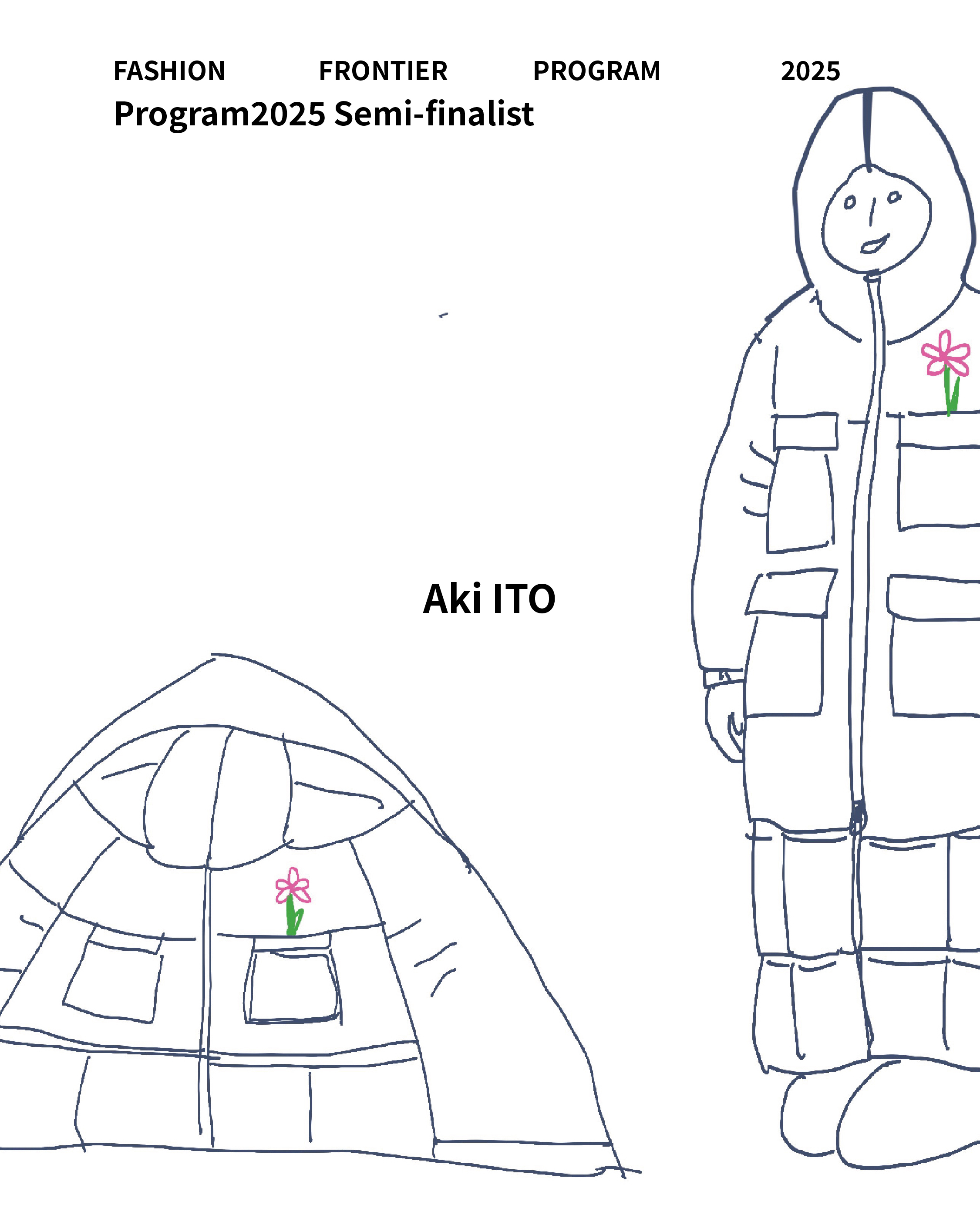
Aki Ito / Japan
As a designer, I want to create something socially meaningful within the small yet intimate space of clothing.
At the age of 15, I experienced the Great East Japan Earthquake in Miyagi Prefecture and lived in an evacuation shelter. The shelters were overcrowded—there was no place I could call my own. With limited belongings, I remember thinking, “If only my clothing could become my personal space.” Now, with the growing threat of a major earthquake directly hitting Tokyo, I want to design a garment that can be thrown on quickly—something beautiful, protective, and practical for escape. A piece that preserves not only life, but also dignity and the spirit.
The “shelter garment” is a proposal to address the challenges of evacuation life through clothing. It is also a statement of what clothing can do—how it can offer both function and meaning. Can “evacuation” embody not just survival, but also cultural dignity and aesthetic beauty? As someone who has long created spatial experiences, I believe I can reframe clothing as the space closest to the body, and reconstruct how we connect to society through it.
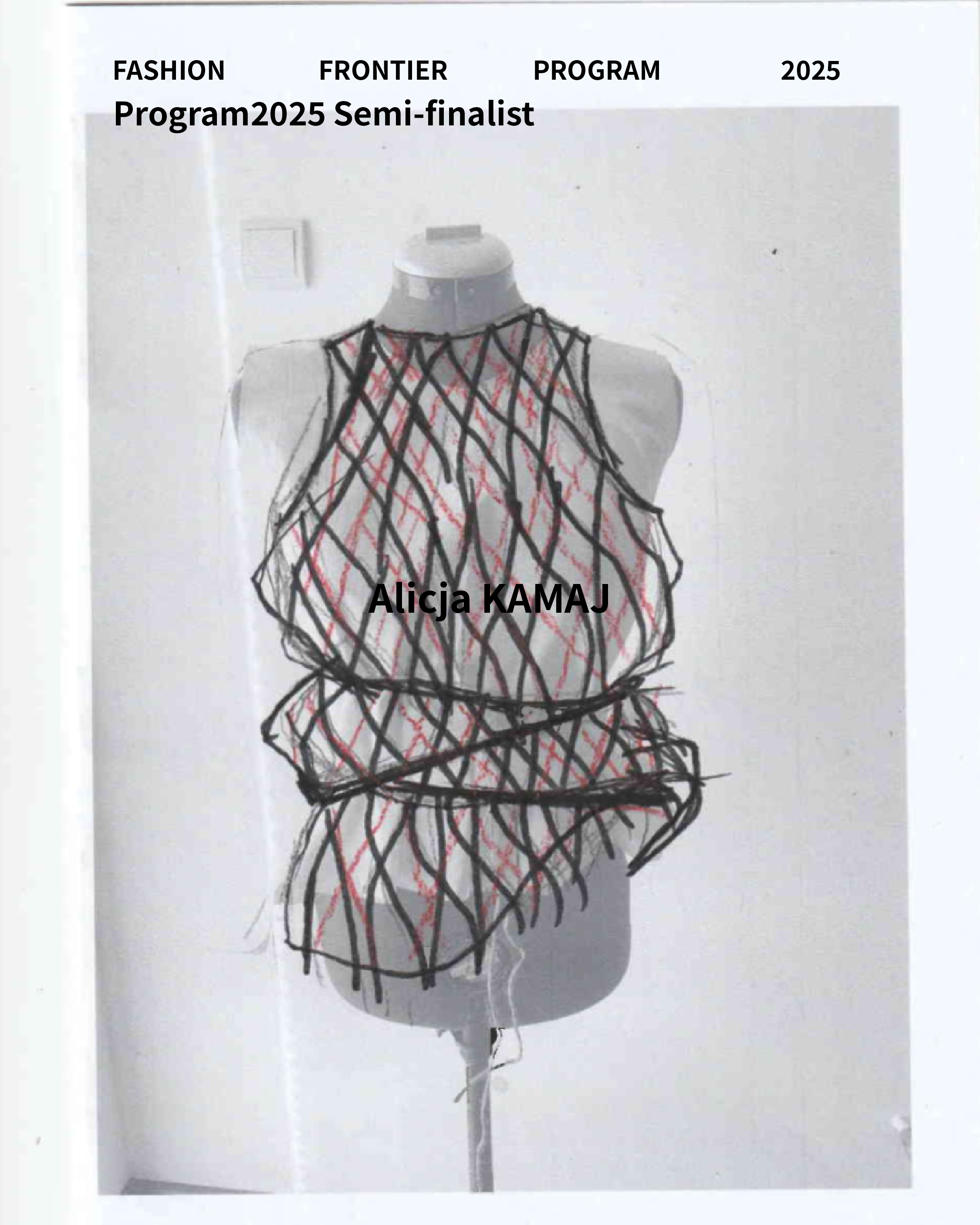
Alicja Kamaj / Poland
I decided to apply for the Fashion Frontier Program because I am seeking a space where I can grow not only as a designer and artist, but also as a conscious human being—somewhere that shares both my artistic and ethical values.
I’ve often heard, “We don’t need more clothes.” And I agree—but I would add: we don’t need more bad clothes. We don’t need throwaway fashion dictated by trends and the algorithm.
I believe sustainability starts with creating emotionally engaging, timeless, and well-designed clothing—pieces people want to keep. “Function” for me goes beyond performance; emotional connection and beauty are also functional qualities. I want people wearing my designs to express their sense of identity—or help them build one.

Ao Umemiya / Japan
I wanted to have a broader perspective in order to gain a deeper understanding of the textile knowledge and techniques I have learned over the past four years and to sublimate them into fashion with a strong social aspect. I would like to always face the balance between what I want to deliver and society, and give it shape through this program.
When I was a student, I visited textile production areas in Japan and was overwhelmed by the quality of knowledge and techniques. I felt a strong desire to leave this impression for the future and to leave these wonderful techniques, which have been declining in recent years, firmly rooted in the world through the power of design.
At the heart of me is the awareness that clothing exists because of textiles. I want to continue making clothes that make fabrics look beautiful, paying particular attention to even a single thread.

Benjamin Sindelar / Czech Republic
My goal is to develop modular, multifunctional garments that not only serve as expressions of identity but also as tools for adaptability, resilience and sustainability.
My work is influenced by the “Compact Culture” design principles, derived from the Ethos of Japanese Life by Toshiko Mitsukuni, Tanaka Ikko, and Seseko Tsune. These principles inform my approach to creating culturally grounded, high-performance systems.
By utilizing upcycled materials and zero-waste techniques, I aim to minimize environmental impact while maximizing functionality and aesthetic value. Moreover, my designs strive for inclusivity, accommodating diverse body types and gender expressions through adaptable sizing and multifunctionality.
Through the FFP, I aspire to contribute meaningfully to the discourse on sustainable design and to develop innovative solutions that address the evolving needs of our society.
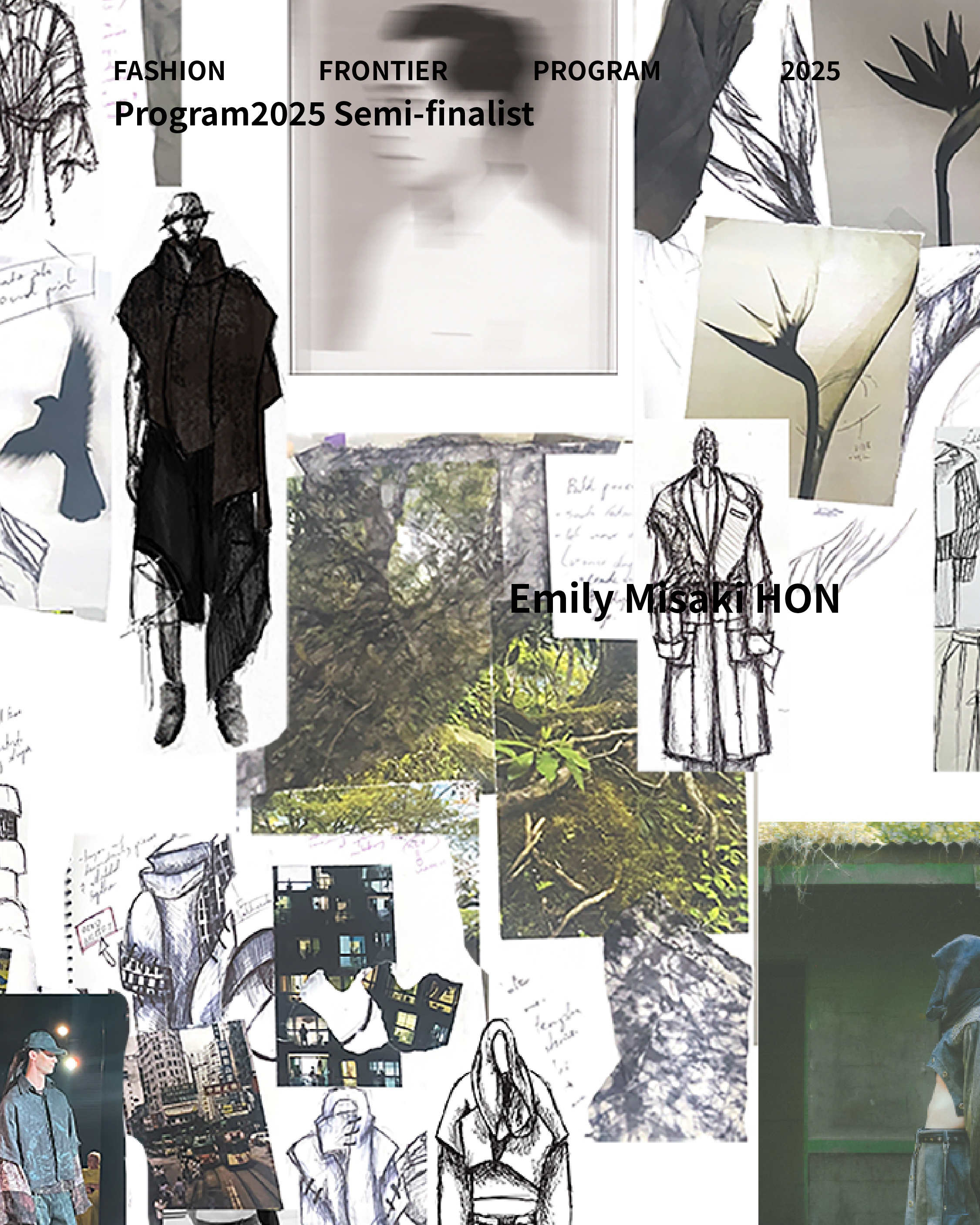
Emily Misaki Hon / Australia
Through all my creation I aim to evoke a timeworn quality, offering an introspective take on beauty, memory, and image.
With each handcrafted piece, I aim to merge traditional techniques with a contemporary sensibility, constructing a quiet narrative that reflects a continuous dialogue about alternate understandings of beauty, family, and self. Through my work, I also seek to convey the importance of artisanship and craftsmanship in a time saturated by fast fashion and automation.
People can witness and understand each stage of making, and appreciate the craftsmanship and labour that underpin true quality and luxury. It is not only the final garment that holds value, but the story, detail, and careful consideration embedded in every step.
I would like to achieve and support cross-collaboration amongst artisans, building communities, and aiding the continuation of knowledge, skill, and craft are central to my practice.

Gerald Brandstätter / Austria
I engage with unused, already existing resources—often dismissed, discarded, and seen as worthless. Within them lies immense creative and ecological potential.
I started researching neophytes: invasive plants that spread uncontrollably and displace and threaten native species. According to environmental organizations, these represent one of the greatest challenges to global biodiversity, and as official measures, the plants are burnt, destroyed, and disposed of.
My project aims to reclaim these unwanted plants as valuable resources. In collaboration with authorities and conservation organizations, I plan to unlock their potential as raw materials. Through environmentally friendly processes, I have succeeded in extracting fibers from these plants.
This project is about creating a respectful balance with nature and preserving biodiversity. What was once considered a burden begins to bloom again—becoming a resource, becoming form, and gaining new appreciation and value. In that transformation, a moment of reconciliation emerges.
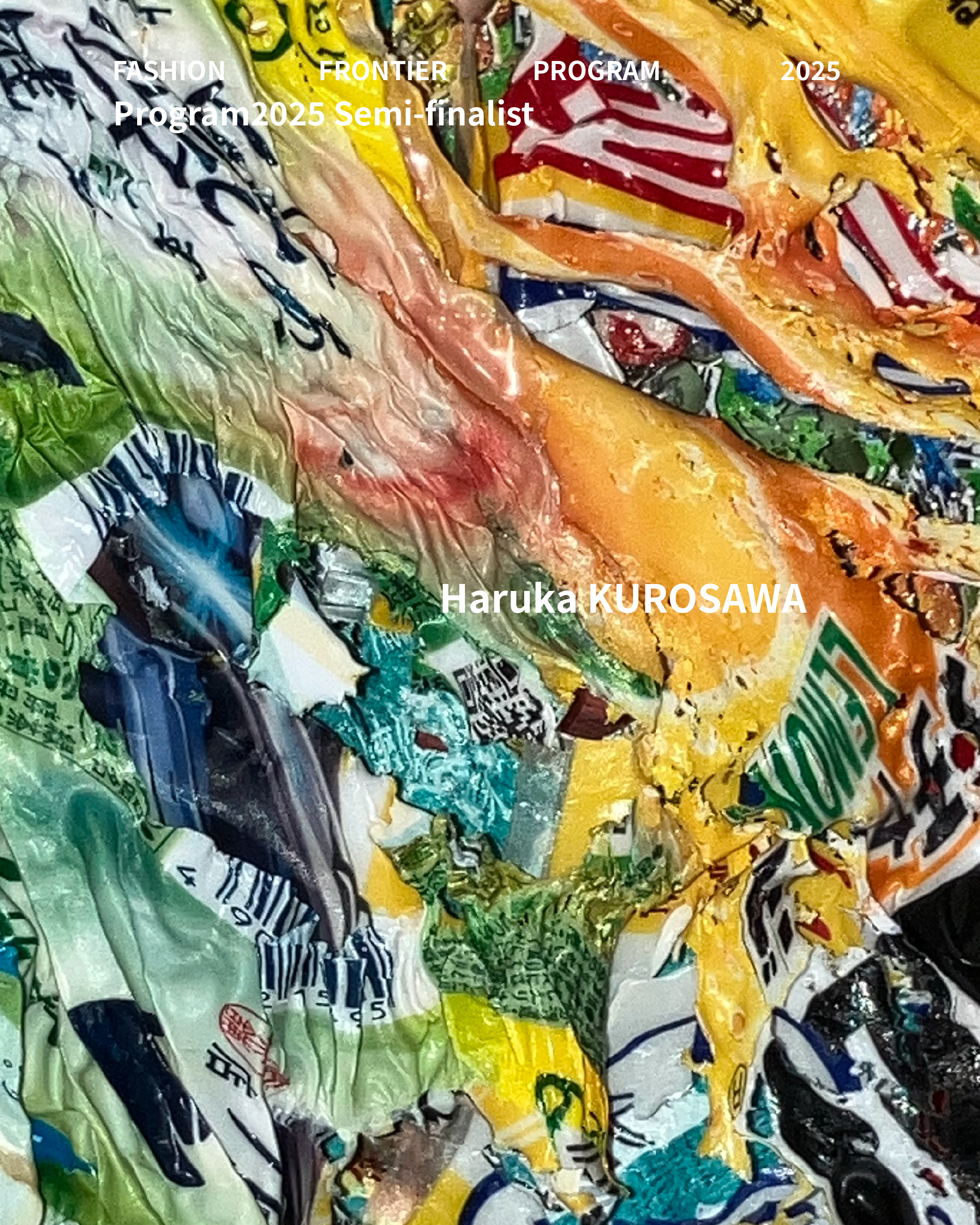
Haruka Kurosawa / Japan
What I want to realize and express is peace, chaos, kindness, and power.
I would like to make a statement that “I care about you.” It is not a specific person, but a nuanced thought that there are always people in the world who affirm you, and that I am one of them.
I have always thought about what it means to live and die. Every day, peace and conflict occur in our cells, bodies, minds, societies, and nature. I am aware of the contradiction that to seek stability and act as if “you are important” is to not pay attention to others, but I want to look at both and create waves and currents within the larger flow by making responsible clothing.
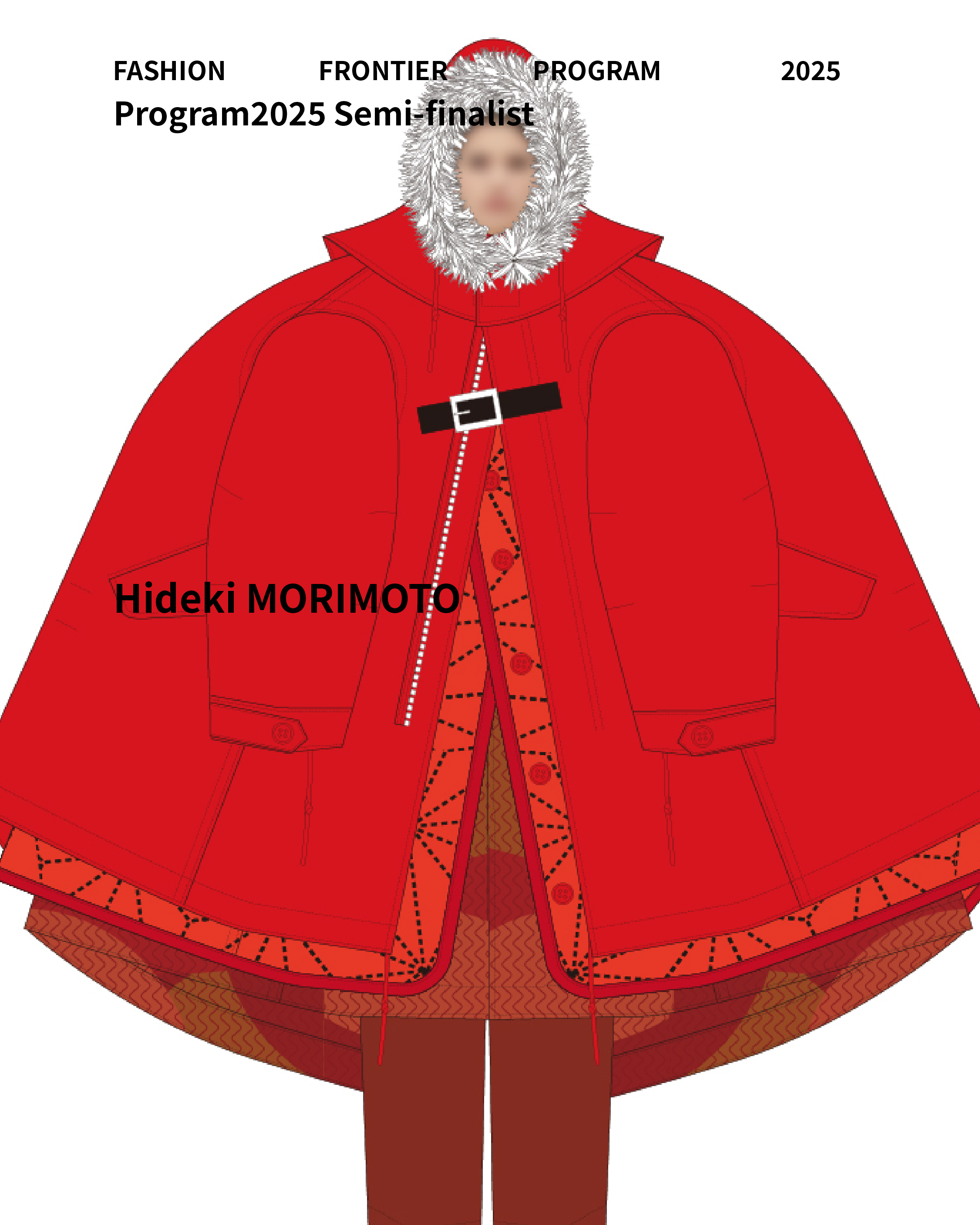
Hideki Morimoto / Japan
Materials from production areas that have been cultivated by the climate and history have a reassuring aspect for Japanese people, and I believe that by coming into contact with them in daily life, we unconsciously form our national values.
However, the industries of these production areas are steadily declining, and Banshuori, which is made around Nishiwaki City, Hyogo Prefecture, my hometown, is no exception. I can’t help but feel that if these techniques are lost, the values of Japanese people will also be lost along with them.
With the development of technology, the realm of the mysterious has narrowed and is often looked at skeptically. I think that the superstitions we were taught as children that say, “If you don’t take care of your things, you will be punished,” have faded and there are fewer opportunities to feel fear in our daily lives, which also promotes a consumer society.
Therefore, we will compare the current situation to the Tales of Tono, written by folklorist Kunio Yanagita, who sounded the alarm about the changes being swept away by the rapid waves of modernization during the Meiji period, and look for clues to solving the problem. In those days in Tono, gods, monsters, and mysteries that people living in cities had almost forgotten were a part of everyday life.
We hope that this will be an opportunity to learn about the lives and ways of life of the people of Tono, who use limited resources carefully, and to reexamine today’s consumer society.

Hikari Hayashi / Japan
I have created works based on the realizations and emotions I have gained from my own daily life. However, these have been completed with “expression” and I feel that I have not been able to think deeply about the next development or connection to society.
Through this program, I would like to challenge myself to create thoughts and mechanisms that will allow fashion to open up the future, rather than just expressing itself.
Currently, I have entered my 20s as a new member of society. While the people around me are becoming accustomed to society, the reason I have chosen to stop and continue creating here is because I do not want to be consumed. Now that not only things but even people are being consumed due to mass production, mass disposal, and temporary trends, I feel that the meaning of the existence of creators is to create “things that are not consumed.” I believe that things that have been made with the effort and time of people have an inherent value that is not disposable.
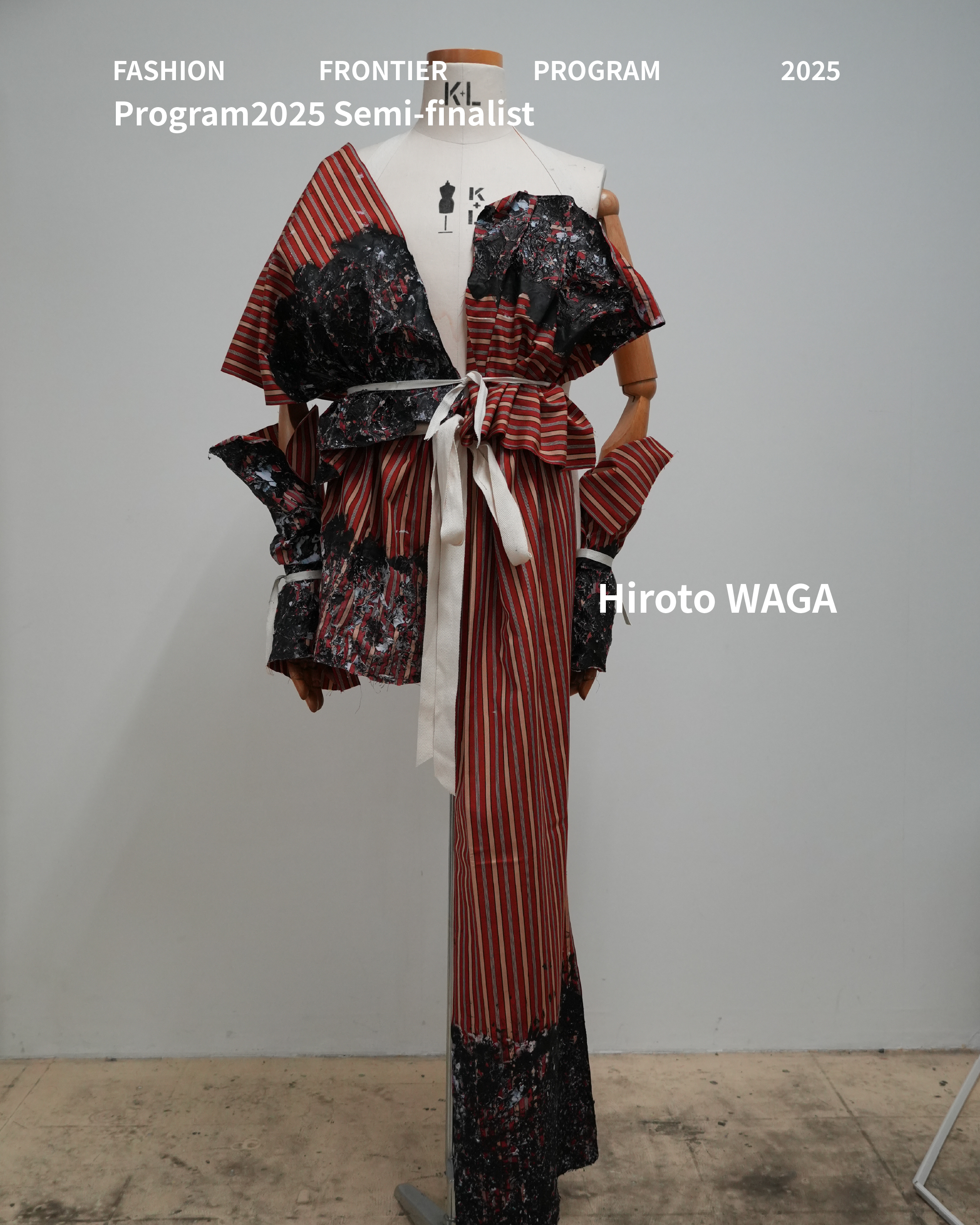
Hiroto Waga / Japan
The social issue I want to solve is the fragmentation in various areas related to clothes. For example, the division between production and consumption due to unclear production backgrounds and the fact that clothes can now be easily thrown away due to the spread of fast fashion. Personal divisions, such as whether or not people have the financial ability to buy brand-name clothes and whether or not they have knowledge about clothes. And mental divisions, such as feelings of inferiority in terms of body proportions and race.
In this context, I aim to bridge the division by creating a structure that allows clothes to be reincarnated many times. And by doing so, I believe that I have shown a way out of the mass production and consumption structure of clothing and a clue to realizing a future in which everyone is freed from internal feelings of inferiority, such as race, and in which truly equal and cyclical production is possible.
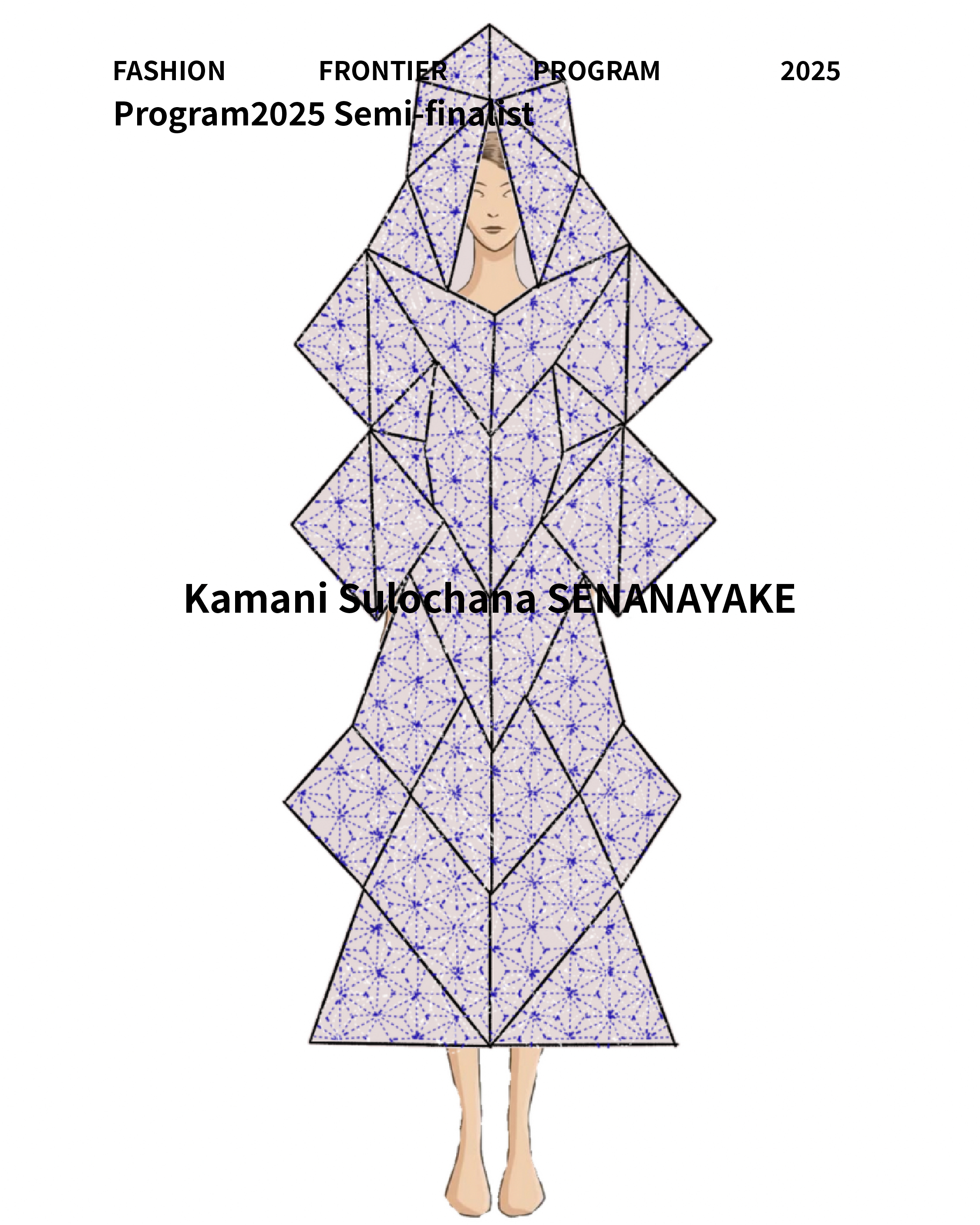
Kamani Sulochana Senanayake / Sri Lanka
What I want to express through my clothes is peace of mind, spirituality, and individuality. I believe that fashion is not just about appearance, but about energy and feelings. I want to create designs that allow people to connect more deeply with themselves and the world.
I have spiritual beliefs and I’m also a vegetarian, so I care about how clothes are made and what impact they have on the earth. I want fashion to be meaningful and kind, not fast and wasteful.
I want to grow more as a designer through this program, learn from many different people, and share my thoughts on fashion with everyone.

Kazusa Horikawa / Japan
I have continued to create while questioning, “What is fashion?” and “What does it mean to dress oneself?” Through this process, I have come to see fashion not as mere taste or self-expression, but as an act of care—a medium through which one can understand and attend to oneself, and reprocess undifferentiated emotions and memories through the body.
However, I have felt discomfort and sorrow in the fact that even the clothes that once protected me—garments steeped in bodily memory—can be discarded so easily. Within the cycle of mass production and consumption, are we not also discarding the time and emotions embedded in those materials? This question became the starting point for my practice. Rather than simply “reviving” what has been consumed, I have focused on the notion of “chewing and sublimating” as I continued to create.
By resisting the prevailing speed and structure of consumption in fashion, and by reconstructing values through relationships with bodily sensation and materials, I hope to propose a new way for clothing to exist—one that lives in harmony with nature.

Kosuke Iijima / Japan
As a Japanese creator who spent part of my youth living in Cambodia, I attempt to confront the global environmental crisis caused by plastics through speculative fashion—reframing clothing as a “device for questioning the present from the perspective of the future.”
During my time in Cambodia, I was deeply struck by the sight of plastic waste drifting along roadsides and the Mekong River. This landscape, laid bare by rapid economic growth and the lack of waste management infrastructure, became a symbolic and formative experience for me—one that evoked the sedimentary layers of the Anthropocene. After returning to Japan and engaging in art school production, I was equally disturbed by how discarded plastic items remained untouched in garbage piles, seldom repurposed. In the fashion industry as well, the mass production of synthetic fibers such as polyester and nylon is a major reason it is considered a polluting industry—making it inextricably linked to the environmental crisis posed by plastic.

Nao Taki / Japan
The most important aspect of fashion for me is creating an experience where wearing clothes becomes enjoyable. I aim to evoke bright and positive feelings by actively incorporating bold color schemes using primary colors and playful choices of materials.
Environmental consideration is also fundamental to my clothing creation. I am committed to producing with minimal waste, knitting with leftover yarn from factories and reusing wood and plastic materials found at recycling centers.
In terms of design, I prefer clothes that are not constrained by gender or body shape. Rather than confining someone to a specific category, I want to create clothes that allow anyone to be themselves as they are. From this perspective, I pursue designs that flexibly embrace different bodies.
Through this program, I want to express my own perspectives and skills related to materials, society, and the body in the form of fashion, proposing a more diverse and free way of wearing clothes.

Natalie Hutterer / Austria
My work is rooted in the idea of creating something new from what already exists—guided by the principles of mottainai(waste nothing) and wabi-sabi (the beauty of imperfection and impermanence).
By working with natural dyes, I aim to raise awareness about the loss of biodiversity, the disappearance of plant species, and the consequences of industrial agriculture and climate change. Working with natural dyes means not imitating the perfection or uniformity of industrial coloration. On the contrary: I emphasize what might traditionally be considered “flaws”: fading, unevenness, stains. These aspects reveal time, place, and process—making each textile a unique witness of its environment. The resulting hues and patterns are not artificially controlled, but alive with nuance, accident, and seasonal variation.
I believe that fashion can be a medium of individual expression, memory, and locality rather than consumption, repetition, and global uniformity.
I am particularly drawn to the program’s emphasis on critical thinking, experimentation, and social engagement. I hope to explore new ways of collaborating with nature not only as inspiration but as an active co-creator.
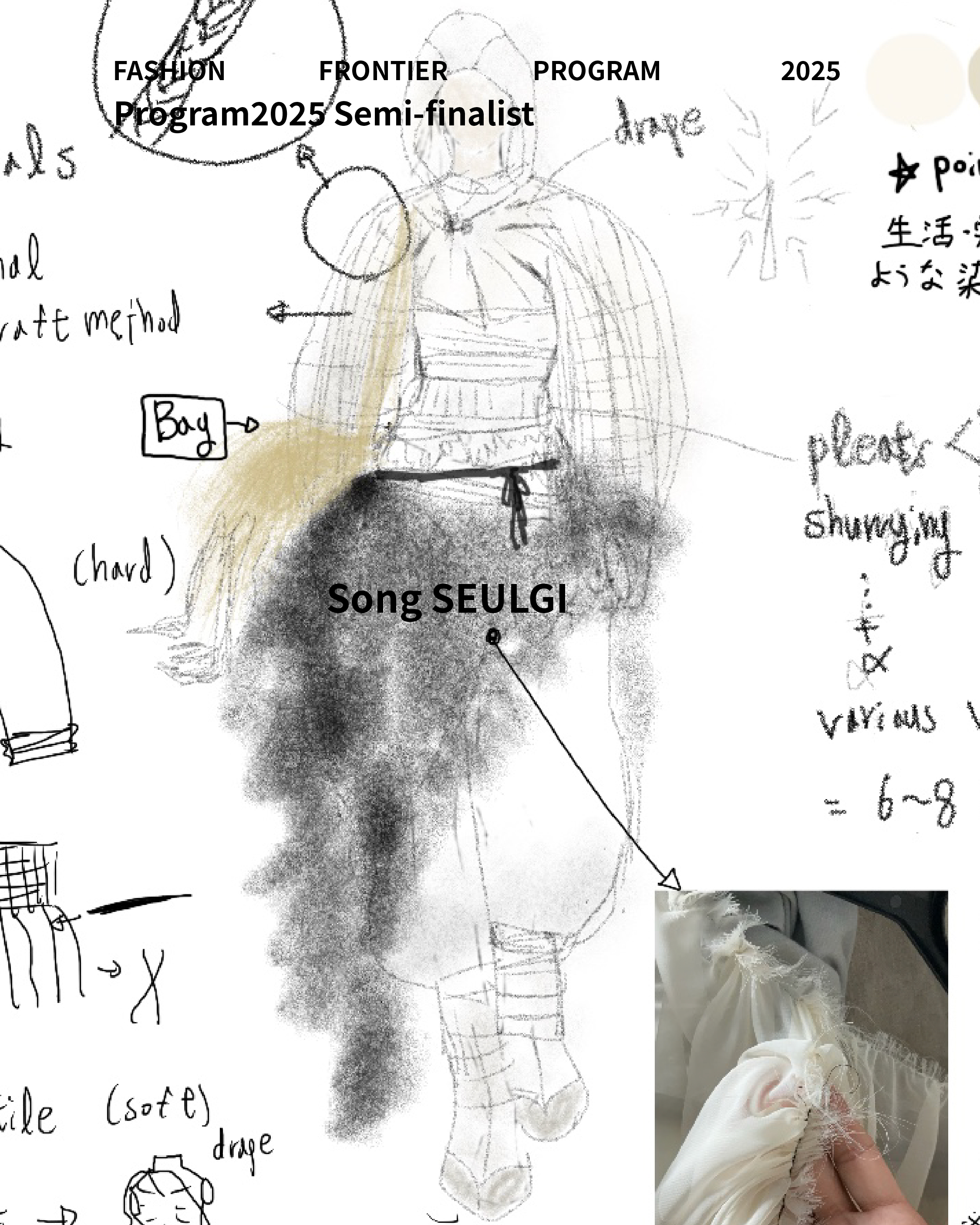
Song Seulgi / Korea
While taking classes for mass production at school, I felt a lot of responsibility. If you are a student studying fashion, I think you will encounter this sense of responsibility at least once.
Fashion is an expression of my emotions, memories, and thoughts. Connecting historical and traditional things to the present era. Creating something that has a good impact on the industry, considering the environment. These are what I want to achieve through fashion.
As I want to make something that can convey a message that is touching even to one person, I have some concerns. How to connect my work activities with the economic part. How to actually incorporate traditional crafts as elements of clothes. And leveling up the originality of design.
I am sure that learning FFP will be a turning point in my life.
We can’t wait to see how these 16 individuals will grow and refine their projects for the final judging.
Please look forward to it.
FOLLOW US
●○━━━━━━━━━━━━━━○●
Please follow FASHION FRONTIER PROGRAM on Instagram for the latest information.
▶︎▶︎FFP Instagram https://www.instagram.com/ffp.jp/