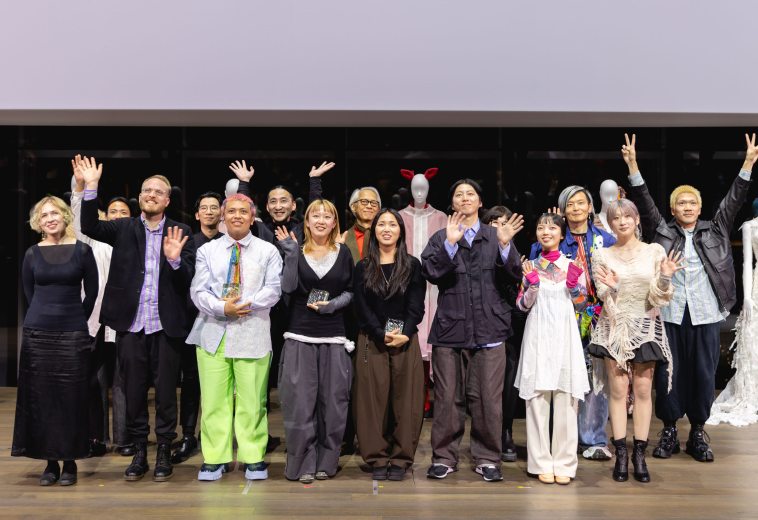
The semi-finalists who advanced from the primary selection refined their concepts further and presented them at the secondary selection held in late September. A total of 16 semi-finalists participated, hailing not only from Japan but also from Europe, Asia, and Oceania, making for a truly international gathering. Their proposals reflected a balance between creativity and sustainability: designs aiming to carry traditional industries and cultures into the future, reimagining waste materials with new life, and treasuring personal or family memories.

Following two hours of impassioned presentations, the jury engaged in an in-depth discussion, drawing on their respective expertise and aesthetic sensibilities.
From this process, 8 finalists were selected:
Alicja Kamaj
Ao Umemiya
Emily Misaki Hon
Gerald Brandstätter
Hideki Morimoto
Hikari Hayashi
Kazusa Horikawa
Nao Taki
What did the jury see in the finalists’ work?
The first point of focus was the necessity of creation. Where do the designers live? What do they think about? How do they interpret society and channel that into their work? Through questions about themes and presentations, judges probed the intention and consistency underlying each project. Questions such as “Why this particular form?” “Why this material?” “What is the key message you want to convey?” highlighted the demand for conceptual depth.
The jury also emphasized each designer’s sense of color—how hues connect with the concept and theme of the work. Discoveries of fresh, captivating palettes and deliberate choices in color schemes earned praise.

“This year, bright and refreshing colors stood out,” noted Kangawa.
“When thinking about ecology, earthy tones tend to dominate, but the use of vibrant colors felt right on an intuitive level,” added Goka.
Miyata remarked, “A desire for harmony is expressed as a refined sense of color, artistic in itself, and capable of moving the viewer emotionally.”
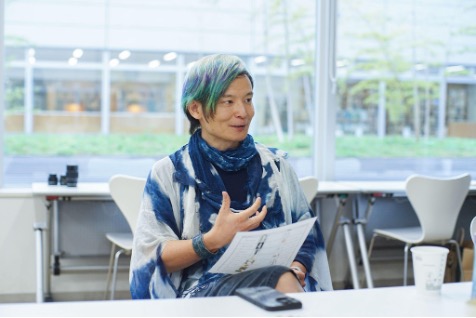
Material selection sparked further discussion. One designer transformed the fragile, ephemeral medium of paper into strength by using it for stage costumes. Another repurposed invasive plants into fashion materials. Yet another reworked children’s clothing—garments not chosen but given, symbolic of blessings—into new forms, connecting memory to present and future.
Practical considerations were also raised: would the garments be wearable, manageable in weight, and realistically producible? At the same time, forward-looking ideas such as designs that “allow the wearer’s own creativity to emerge” (Watanabe) drew attention.
Advice for improvement was also offered: “By monitoring yourself deeply and identifying shared insights with others, your work gains persuasiveness” (Kurino), “Sharpening the setting and fully building the world around it will make the message stronger” (Miyata).

Although not selected as finalists, many semi-finalists were praised for their pursuit of materials and their dedication to fieldwork. However, several judges pointed out being too material-focused as a whole: “Perhaps there is an imbalance between your passion for materials and their passion for clothing/garments.”

As the consumption–disposal cycle in fashion accelerates, traditional crafts decline, and environmental issues intensify. With a strong sense of urgency about the current situation, the semi-final presentations conveyed how the designers had repeatedly reflected and acted to drive change through the power of fashion. At the same time, the overall level of participating designers continues to rise with each edition. Those selected as finalists were the ones who not only deepened their concepts through persistent reflection and experimentation, but also managed to surprise and impress the jury with fresh perspectives.
Looking ahead, the finalists will complete their works with expert advice and financial support, preparing to present them at the final selection in Tokyo in December.
FOLLOW US
●○━━━━━━━━━━━━━━○●
For the latest information, please follow us on FASHION FRONTIER PROGRAM’s Instagram.
▶︎▶︎FFP Instagram https://www.instagram.com/ffp.jp/
![FASHION FRONTIER PROGRAM 2026 Entry Information [Application closed]](https://ffp.jp/wp-content/uploads/2026/04/ffp2026_opencall_hp_pc_IN-758x520.jpg?crop=1)