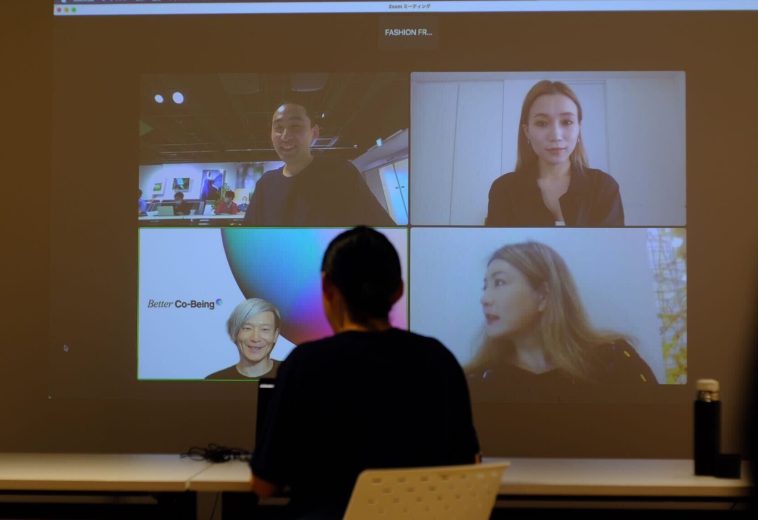
Mitsuko Watanabe (Fashion Journalist): There are many designers who are unique and have different things they want to express, and each one provides stimulation and impact. It’s difficult to choose just one collection, but one important experience that still motivates me is Maison Martin Margiela’s show in Paris. This was before it became Maison Margiela, back in the 1990s to 2000s when Martin himself was handling the shows.
The show locations were also unusual, held in ordinary, everyday street corners or secret spaces under large bridges over the Seine River, which was surprising in itself. But what was really exciting thing was how the staff, dressed in white lab coats, warmly welcomed us with wine. This inclusive atmosphere was a comforting yet stimulating experience amidst the Paris Collections.
The fashion world back then, with luxury brands at its pinnacle, had an exclusive rather than inclusive atmosphere, where only selected people could watch and enjoy the shows. While that’s fine in its own way, Margiela’s show, which went in the opposite direction, not only in the clothes but also in the presentation, reflected his spirit and creativity that broke down existing values. It was fresh and had the power to change the era itself.
Nakazato: The surprise element of the show was vividly conveyed through the media, but warmth is something that can only be physically felt by being there. Knowing there was such a gap, I feel an added depth to Maison Martin Margiela’s creations. It’s fascinating. What about you, Ms. Tominaga?
Ai Tominaga (Model): Hearing the name Martin Margiela brings back memories. Among many brands, Margiela always stood out with its distinct expression. I once walked his runway with black stockings covering my face. Not being able to see where I was going, I had to figure out how to navigate the runway. Covering the face is common now, but Margiela was pioneering in that respect. He is such an edgy creator.
While Margiela was wonderful, when I think of high creativity, John Galliano comes to mind, with whom I have shared many runways. He is now the Creative Director of Maison Margiela, but I’m referring to his time as a designer for Christian Dior. Back then, Galliano transformed creativity into entertainment, making the shows enjoyable and entertaining for everyone. His designs were also very avant-garde and creative, fun to watch and walk the runway. It was also the time when he was interested in the Japanese street culture, Yamanba girls, with which I deeply sympathized. I consider it an honor to have encountered his work and collaborated with him during that era.
Nakazato: Even through the media, the excitement of what might come out from the backstage and the thrill of seeing the outfits that made people go ‘Wow!’ was palpable. When people’s hearts are moved in various ways, they recognize it as incredible creativity, I think.
Watanabe: When it comes to addressing social issues, Vivienne Westwood and Stella McCartney immediately come to mind. But going back in history, many designers like Coco Chanel, Sonia Rykiel, and Rei Kawakubo broke existing rules of their times and proposed new ways of living.
Coco Chanel transformed the perception of black, which was considered a mourning color, into elegant and practical dresses. She also liberated women’s hands by introducing shoulder bags at a time when handbags and clutches were the norm. Sonia Rykiel elevated knit fabric, which was seldom used in high fashion, into a modern statement of près du corps(body-conscious clothing). Rei Kawakubo, as if directly challenging the Western-centric social values and fashion, introduced collections known as ‘Boro look’ – all black and full of holes – creating the legendary ‘Shock of Black’. She also removed ‘masculinity’ from men’s fashion, receiving high praise for collections that embodied ‘men who don’t wage war’ and ‘men who wear freedom’.
These designers posed questions to society not so much through loud words but through their creations. Women empathized with this, felt empowered, and it likely led to further actions. As Yuma-san said earlier, creations imbued with messages do stir emotions.
Nakazato: Reflecting on this, design has often inspired courage and brought about change in actions. As a designer, realizing the immense power of fashion encourages me and makes me hope to be involved in something similar. Ms. Tominaga, what are your thoughts?
Tominga: Mitsuko-san’s discussion reminds me that fashion designers have historically engaged in various social activities. Now, in addition to that, issues like environmental concerns are increasingly being addressed by brands and designers in their messaging. What message a brand or designer chooses to represent as part of their identity, and what they propose, is becoming increasingly vital for all brands. Also, the methods of expression are diversifying. While previously it was mainly about expressing through clothes, now the possibilities with media have expanded, and with the diversification of social media, they can freely communicate the allure of fashion through words and videos. I’m really excited about the future expansion of these forms of expression.
Nakazato: Indeed, the ways in which designers convey their thoughts, visions, and messages have diversified. That’s why the method of conveying them is also being questioned.
Watanabe: There are various social issues, but I don’t think the designers need to feel obligated to address all of them or think that they can’t speak unless everything is clear. It’s impossible to respond to everything. It might be best to communicate about things that are connected to the essence and spirit of one’s own creations.
Nakazato: That’s true. Come to think about Chanel and Kawakubo, their lifestyles or philosophy as designers are directly translated into strong energy in their work. That authenticity and strength, when felt, shakes the emotions of the viewer and moves people as a manifestation of high creativity.

Watanabe: I’m actually struggling because I can’t seem to part with my clothes. I thought I’d get rid of some when I stepped down as the editor-in-chief of ‘VOGUE JAPAN’ at the end of 2021, but it turned out to be harder than I imagined. Each piece of clothing embodies special nuances in the material, silhouette, and details, and the various decisions behind them. It almost feels like these items have a life of their own. Plus, each piece vividly brings back the feelings I had when I purchased them. It’s really hard to discard items when you remember the spirit and soul the designers infused into them and the desire to keep that with you.
Tominaga: I completely agree. When a piece of clothing holds thoughts and memories, it becomes something you can’t let go of. It transcends the concept of mere apparel and becomes a part of your body, a part of your life. Even if it’s tucked away in the corner of a closet, you still want to keep it properly. Also, fashion trends tend to come back every 20 years. Y2K is in vogue now, and I entered the fashion world in the late 1990s and early 2000s, so it feels like it’s come full circle. The idea of wearing clothes from that era again is quite exciting.
As a designer, I find it more rewarding to create something when I know that the person who wears it accepts and values my wishes. In addition to the designer’s intentions, it is a combination of the wearer’s own memories of the time. It feels very exciting.
Watanabe: The presence of social media allows for easy communication, and it’s wonderful that designers can express themselves in their own words. However, they must be mindful of the impact those words might have. Words can be taken out of context and spread in ways not intended. Therefore, it’s essential to have basic knowledge, but it’s also important not to be overly cautious about words alone. Why do you want to use those words? If someone is hurt by them, why did it hurt them? Reflecting deeply on the emotions behind the words is the first step. There’s no manual for crisis management, if there is, relying solely on one wouldn’t deepen understanding. The key is to exercise empathy and consider others’ feelings.
Nakazato: Ms. Watanabe, you worked as an editor for fashion magazines. A visual image is created through the photography style, hair and makeup, and the combination of models. However, the more influential these images become, the more they are subject to unintended interpretations and criticism, such as racial bias in model selection or overlooking certain cultures in hair and makeup. How do you think one should balance being considerate of people’s feelings while still expressing unique creativity?
Watanabe: Especially in the last five years, there has been more focus on this balance. When taking photos, the photographer’s style or the intended ambiance can sometimes influence the skin tone of the models in a specific way. For example, the choice of lighting or filters may subtly shift the appearance of the models’ skin tones, reflecting a particular color palette or mood desired for the shoot. Twenty years ago, the style would have been prioritized as ‘it’s just the style of the piece.’ But recently, more consideration is given to the models’ will and expressions.
Nakazato: I see, so it’s about engaging with models as individuals and finding a balance. Ms. Tominaga, what are your thoughts on communicating via social media?
Tominaga: Of course, it’s better to avoid situations like public backlash. However, it’s not uncommon to end up in such situations. Sometimes you might be criticized for things you didn’t intend, and some cases are unavoidable. But fundamentally, fashion designers belong to the world of art. Expression should, above all, be free. As long as it doesn’t demean or insult a specific group of people or something specific, I believe there can be a degree of bias in creativity. If fearing backlash too much, creators won’t be able to create freely. Keeping in mind not to hurt others, if someone in the team suggests that a certain idea might be questionable, we should discuss it and find alternative ways of expression. However, artists should not change their convictions. I think that stance is important.
Nakazato: Having that cushion of discussion and still choosing to express something is crucial. This ties back to our earlier point about high creativity moving emotions. If expression becomes safe, mundane and loses its sharpness, emotions won’t be stirred.
Tominaga: Then it becomes uninteresting, doesn’t it?
Nakazato: Yes, indeed. While negative emotions are best avoided, it’s necessary to earnestly engage with how to move emotions and create good fashion.

Watanabe: To express something through fashion, it’s crucial to show people a different world, to move their emotions, to make them feel the beauty and be inspired. Always shine a light on your core belief, the fundamental feeling of ‘I want to create clothes because I think this way.’ When trying to make your work appealing to a wider audience, you might be tempted to tone it down a bit, to play it safe. However, especially when you’re young, I think it’s fine to not calculate too much and to go a bit overboard with what you want to do. Often the voice we use in everyday conversation, which we think is loud enough, may actually be quite soft, and might not reach even a meter away. It’s important to consciously project your voice 1.5 to 2 times louder than you imagine. I believe the same principle can apply to design.
Tominaga: Social responsibility and creativity may seem like polar opposites, and aiming for both can appear very challenging. But it’s all about balance. Leaning too much on one side doesn’t result in an attractive expression. It’s not about splitting your focus evenly, but about achieving an overall balance. And, as Ms. Watanabe said, it’s crucial to thoroughly explore how the work you want to create can move people’s hearts, aligning it with your own beliefs. How much can your belief be conveyed through this expression? Even with a single color, like blue, which shade conveys your message? A bright blue and a deep blue can give completely different impressions. I urge you to delve deeply into these nuances, as that’s what fashion allows for. Enjoy it, delve deep, and fully explore your self-expression.
Nakazato: Going overboard might be just right. In everyday life, we’re often told that moderation is key, but it’s important to try going all out once in a while. When thinking ‘It’s still not enough’ and keep pushing, and you’ll find your voice. That’s important. Otherwise, there’s always a tendency to settle for moderation.
Watanabe & Tominaga: You never had that sense of moderation to begin with, did you? (laughs) We hope everyone tries to go all out too.
Nakazato: Ha ha, thank you both for sharing your valuable insights today.