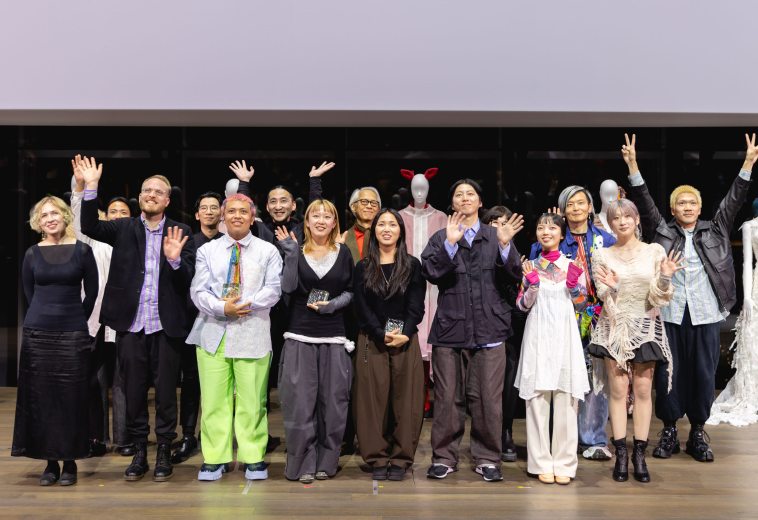
On Tuesday, December 3, 2024, at KUDAN HOUSE (Kudanshita, Tokyo), the eight finalists for the FASHION FRONTIER PROGRAM 2024 gave their final presentations, and the jurys held a final judging and award ceremony.
About the FASHION FRONTIER PROGRAM 2024 Winners
This year’s program began with 17 semi-finalists, selected from a large number of applicants from Asia, Europe, Africa, and the United States and abroad.
The 17 semi finalists in the education program through the summer and fall presented their concepts for their works during the secondary selection, and in September at the second selection 8 finalists were selected.
The finalists, who received technical advices from guest lecturers as they worked to give shape to their designs, made their final judging on December 3 (Tue).
After a strict judging by the juries, the winners of this year’s competition were decided as follows.
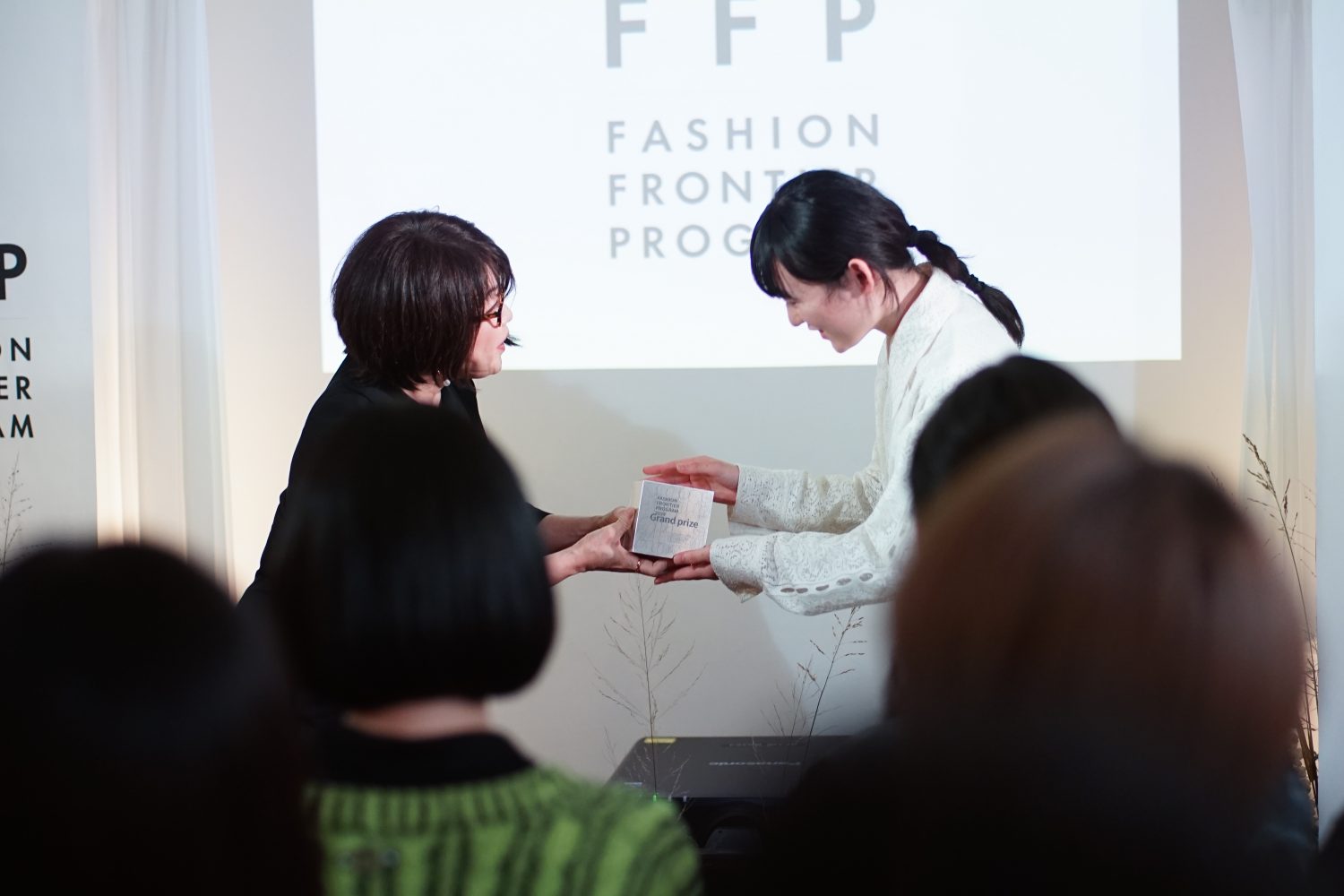
Grand Prize
Misaki Suda
“Forest Clothes : In the glow”
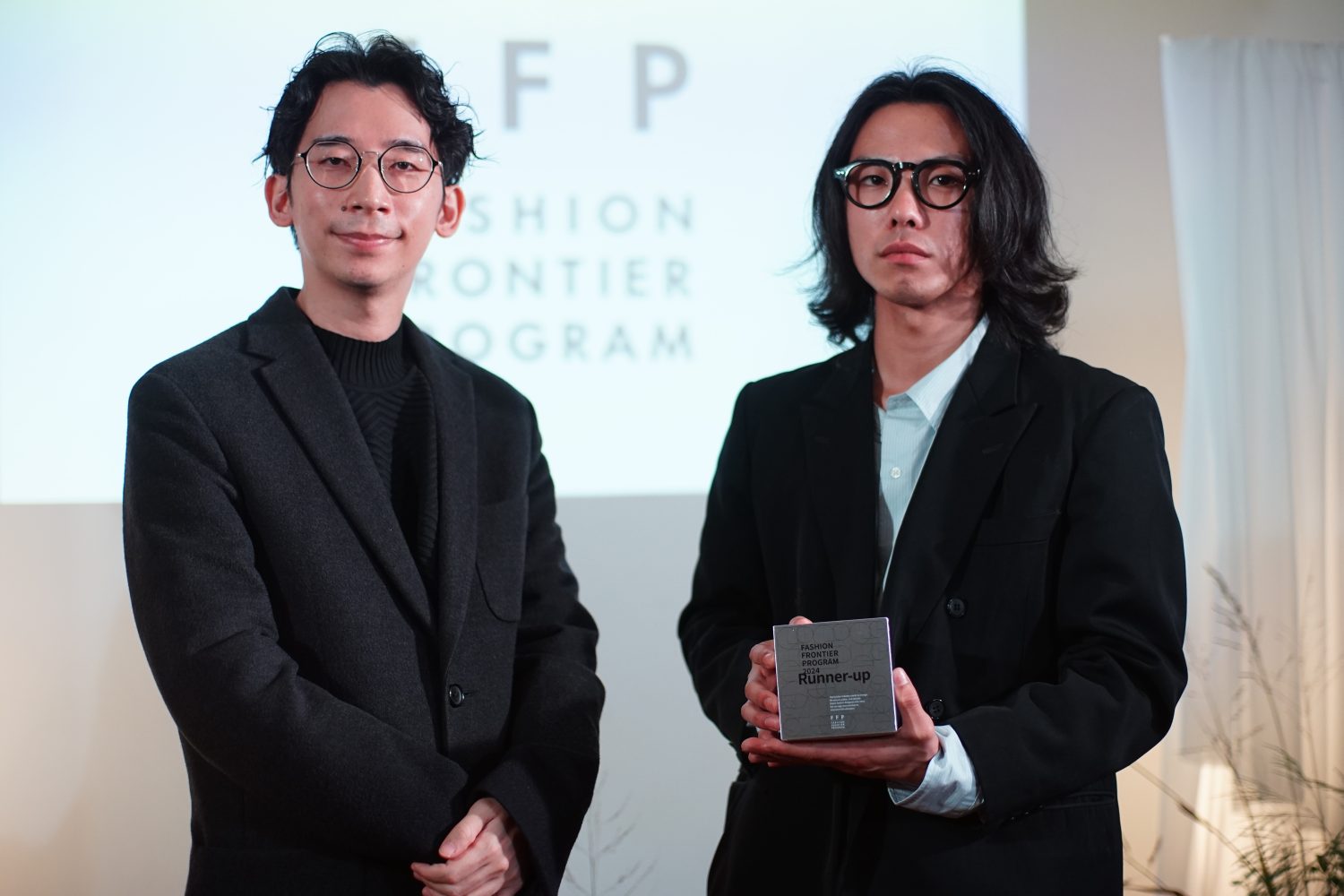
Runner-up
Kiyoshi Tomiyama
“KEMMUN”
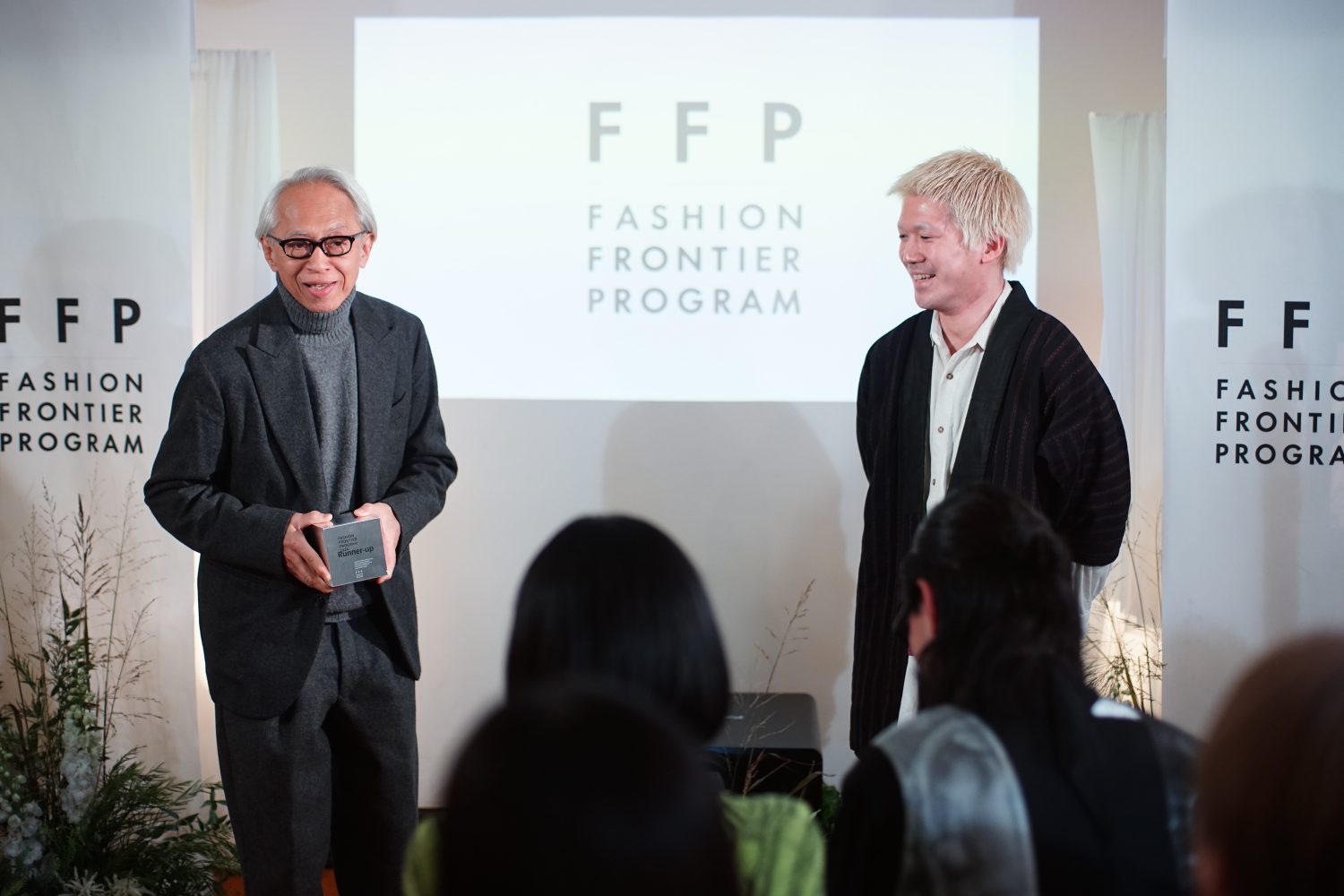
Runner-up
Mitsuki Murata
“WE WANNA 農!!!”

About the FASHION FRONTIER PROGRAM 2024 Juries
The FASHION FRONTIER PROGRAM invites a diverse group of people, regardless of genre, to serve as jurors in order to consider the future of clothing, food, shelter, and ultimately the future of humanity through thinking about the future of fashion. We encourage a multifaceted discussion on what and how we should evaluate and consider the true meaning of making clothes while maximizing the pleasure as fashion.
Mari Katayama|Artist
Eugene Kangawa|Contemporary Artist
Hirofumi Kurino|Senior Advisor, UNITED ARROWS LTD. In charge of creative direction
Koichi Goka|Head of Biodiversity Div. NIES, Japan
Sara Sozzani Maino|Creative Director Fondazione Sozzani
Yuima Nakazato|Fashion Designer
Nanine Linning|Choreographer and Opera Director
Hiroaki Miyata|Prof. School of Medicine, Keio University
Mitsuko Watanabe|Fashion journalist
Details of Winners’ Works
Grand Prize
Misaki Suda “Forest Clothes : In the glow”

While forests provide us with healing and blessings, they can also pose a threat to us if we do not treat them properly.
Based on the theme of “creating an opportunity to rethink the relationship between people and forests through clothing,” the production focused on sunlight filtering through the trees, a sign of the forest’s abundance.
The textiles, made from wood from managed forests, were brought into a lush, light-filled forest, where the patterns were dyed using the light filtering in through the trees.
The dyeing process used a blue-printing technique, which has the unique characteristic of developing colour when exposed to light, allowing the light of KOMOREBI(the sunlight filtering through the trees) to directly coat the textile.
This clothing creates the experience of being enveloped in the rich light of the forest, providing an opportunity to think about forests.
Material:TENCEL™ Wooden thread [Washi no Nuno Co.
Photography by YASUNARI KIKUMA
Hair by ABE (M0)and Makeup by yUKI(M0)
©︎ FASHION FRONTIER PROGRAM
Kiyoshi Tomiyama “KEMMUN”
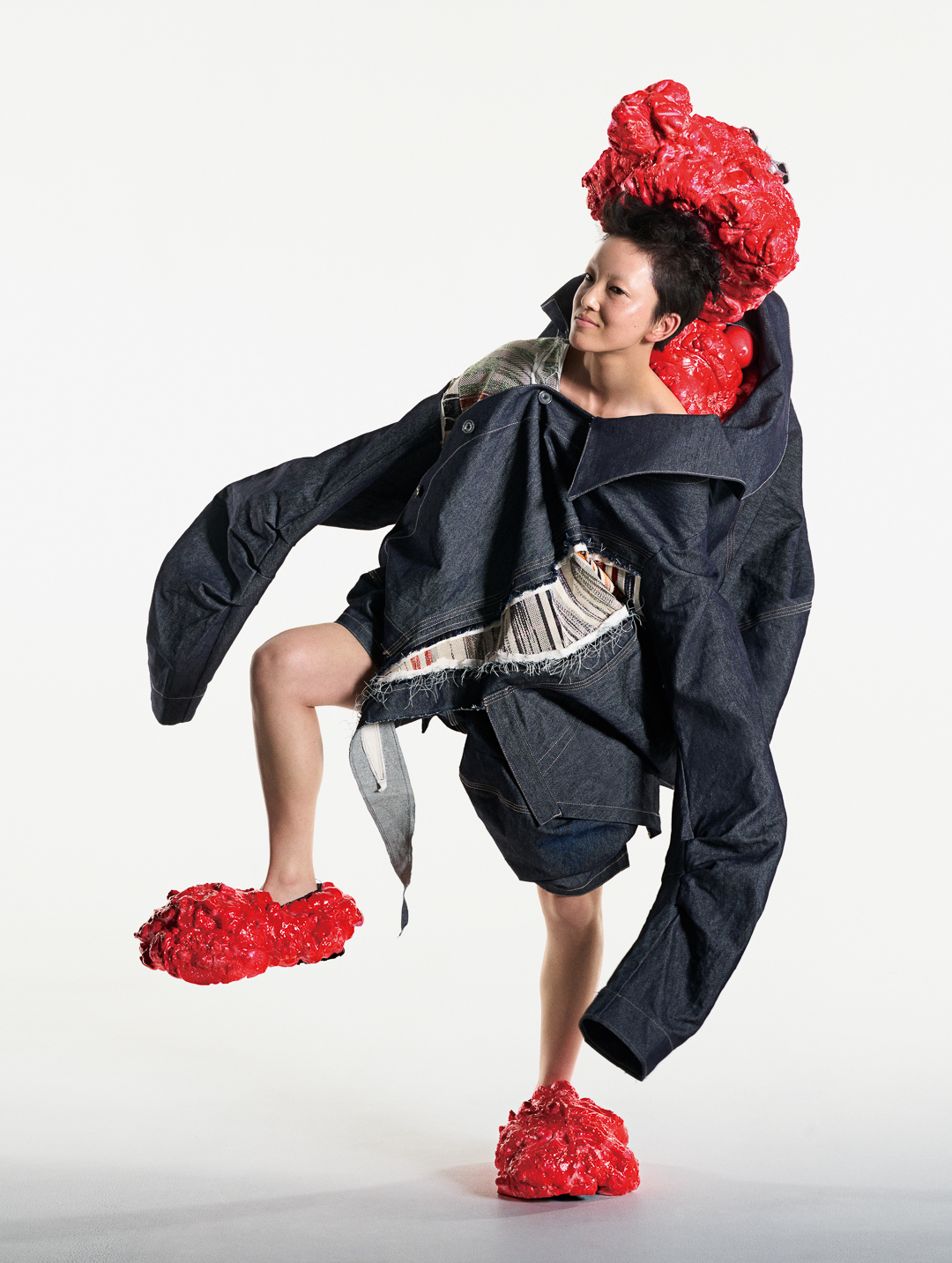
Even now as i’ve grown up, his presence remains strong in my mind, and I focus on the declining culture of Amami Oshima and new uses for sugar cane, and I am creating clothing that has awkward kindness and innocence, based on my island roots and my own identity, with the aim of inheriting and sublimating culture.Because we spend a lot of time with our clothes in our daily lives, I want people to wear them together with yokai (Kemmun). That is what I think yokai (Kenmun) is.
Material:Bagasse paper denim 12.5oz / Bagasse yarn mixed minaori
Photography by YASUNARI KIKUMA
Hair by ABE (M0)and Makeup by yUKI(M0)
©︎ FASHION FRONTIER PROGRAM
Mitsuki Murata “WE WANNA 農!!!”
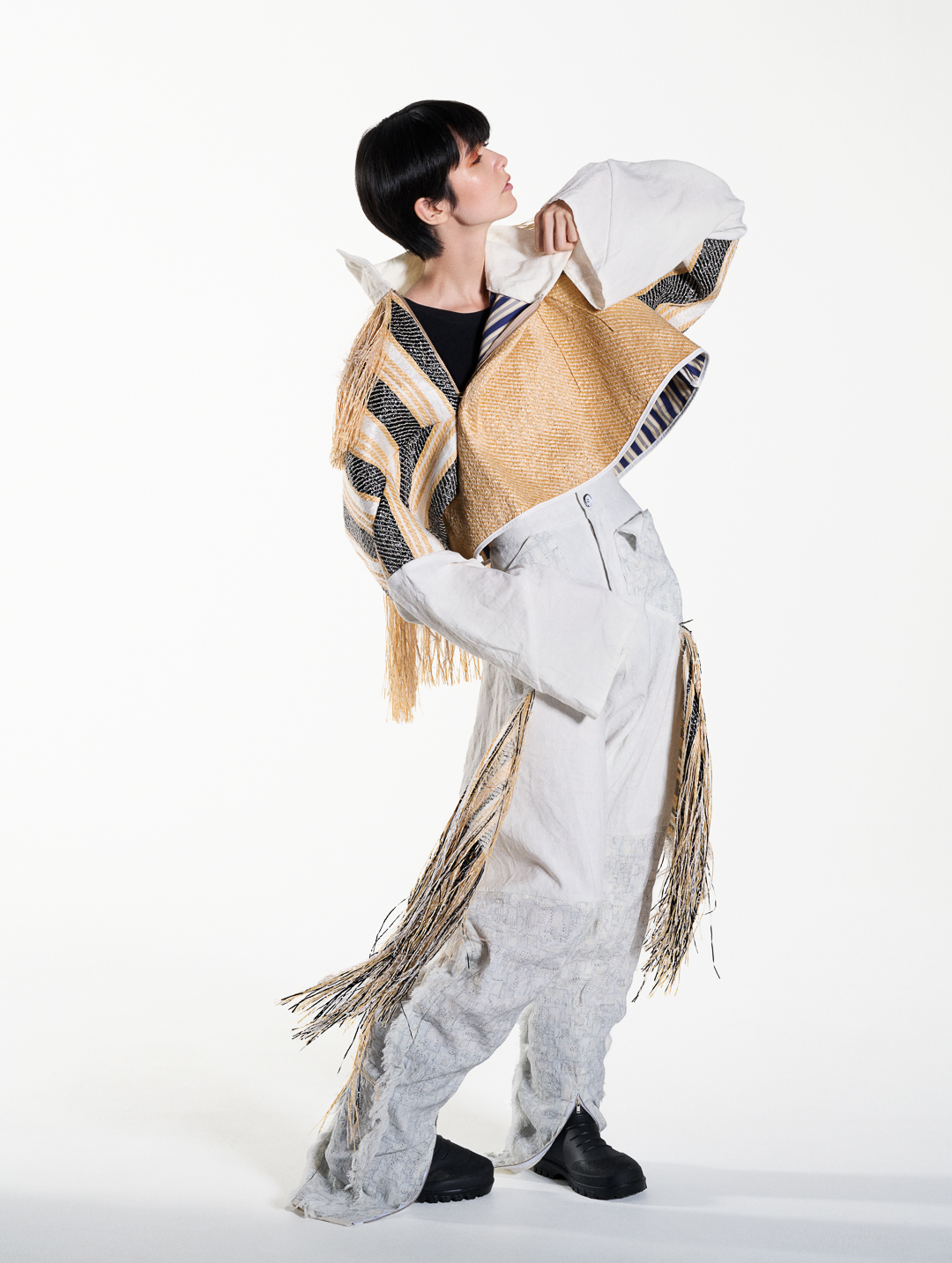
When he spoke the word “HYAKUSHO”(Japanese peasant) in his lifetime, it carried the weight of those who, though tossed by the hardships of their lives, cherished people, nurtured life, and stood resilient with quiet pride and unshakable conviction.
My fashion is 農(Knoh: agriculture).
Agriculture has long been overlooked, despite being the foundation of our existence. Without it, we cannot live.
Agriculture was once our way of life—our thread of connection.
Agriculture is more beautiful, more resilient, and more interesting than you imagine.
In the mountain villages of Nagano, the “agriCULTURE” inherited across generations is more than farming.
It transcends mere sustenance—it is a form of design: not just “fashion design” in the sense of garment, but the design of how we live as human beings.
The NORAGI of the past and today’s workwear—both are garments made for the act of farming, for living on the land.
I believe that when new garments for farming is born, it will give rise to new ways of farming, and with it, new ways of being human.
As peasants once did, I create with my body. That is the best contribution I can make, as a peasant living in the present.
To the peasant of a century from now.
Material:Blue Sheet Filament, Blue Sheet, B rank Woven Fabric (Cotton Bamboo Mixed Weave, Cotton)
Photography by YASUNARI KIKUMA
Hair by ABE (M0)and Makeup by yUKI(M0)
©︎ FASHION FRONTIER PROGRAM
FOLLOW US!
●○━━━━━━━━━━━━━━○●
For information on the exhibition where you can actually see the works, please click here (Japanese only).
Also, please follow FASHION FRONTIER PROGRAM on Instagram for the latest information!
▶︎▶︎FFP Instagram https://www.instagram.com/ffp.jp/