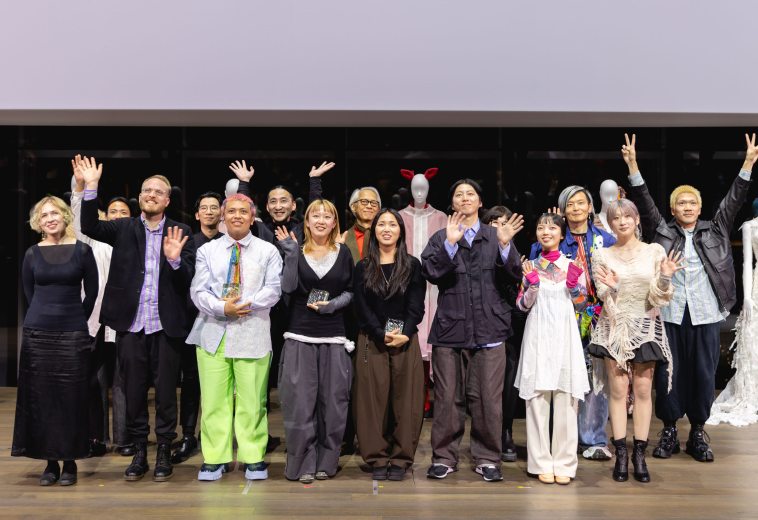
Lecture 7 was held, and we would like to introduce a part of the lecture and what the semifinalists learned/new perspectives they noticed.
Lecturer / Theme
Lecturer: Ann McCreath (Fashion Designer)
Theme: ”Considering Clothing Production from the Clothing Disposal Site”
Profile
Ann McCreath is a multi-faceted fashion designer and entrepreneur. Born in Scotland, she trained in Alta Moda in Rome and worked in fashion in Milan and Barcelona before setting up KikoRomeo in Kenya in 1996. The brand is a pioneer in sustainable fashion, fostering development of craft skills and leveraging higher wages through cutting-edge products. Developing a flexible production model in Kenya, from grassroot rural artisan to the KikoRomeo sampling workshop and garment factories, she was able to manufacture a wide range of standardised products with a unique crafted element. In 2020 her daughter Iona took up the role of Creative Director and Ann increased her teaching work, designing an Africa-relevant sustainable fashion curriculum, based on her lived fashion experiences across the continent. She now mentors many of Africa’s fashion talents and nurtures peer mentoring groups of past alumni.
Ann is passionate about using fashion for positive change, manifested by her founding FAFA in 2008 and its multi-creatives Fashion for Peace shows. These have brought estranged communities together, opening difficult political conversations around a beautiful dress! An expert in low-tech, she has designed & implemented training of artisans and women’s groups for UNHCR, IOM, ITC, and UNWomen.
Articles/Media/Citations:
New African Woman’s Ultimate Power Players of African Fashion (2015), Arise Top 100 Women Influencing Africa (2012), Fashion Africa (Jacqueline Shaw 2014), New African Fashion (Helen Jennings 2011), Fashion Cities Africa (Hannah Azieb Pool 2016) and Business of Fashion. Her articles have been published severally in The East African Standard
Lecture Outline
Ms. McCreath, speaking from her base in Kenya, addressed the massive influx of secondhand clothing into Africa and its consequences. She explained how garments brought in through donations and charity are often discarded or end up undermining local industries, with declining quality and growing mountains of waste becoming urgent problems.
She noted that while countries like Rwanda and Burkina Faso have moved toward import restrictions and the development of domestic industries, many others remain dependent due to a lack of political will or vision. The lecture also highlighted the realities of secondhand markets such as Gikomba, as well as emerging brands where designers repurpose discarded clothing. Against the backdrop of structural issues rooted in the colonial era, Ms. McCreath emphasized the need to balance fashion’s sense of joy with its social responsibility.
Key Points Learned
Some of the key points that were learned by the semi-finalists and last year’s winners who attended the course are listed below.
“I feel like the realisation of colonialism still shapes the reality of Africa, stuck with me for the whole lecture.”
”I was impressed by the attitude of turning a negative legacy into a positive aesthetic, as seen in Mabatini’s work combining patchworked second-hand clothing with traditional textiles, and NKWO’s knitting using fibers from lower-grade second-hand denim.”
“I realized that what’s often presented as charity or help can actually harm local industries and make it really hard for designers to access good quality materials.”
“I strongly felt that in my future creative work, I want to approach clothing not merely as a “consumable,” but as something that embodies culture and generates relationships, creating works that can serve as a starting point for rethinking values and actions.”
“I also came to understand once again that politics influences creation (industry). It struck me as interesting that politics can also nurture culture, and it motivated me to start studying Japanese politics as a first step.”
Through this lecture, participants shared that they were struck by the realization that the massive influx of second-hand clothing into Africa affects not only the environment but also local industries, culture, and even political structures. They noted how what is often framed as charitable donation or trade policy in fact conceals structures reminiscent of colonial legacies, directly tied to our own patterns of consumption.
At the same time, there was a strong sense of hope in the creativity of local designers who reinterpret second-hand garments and traditional textiles, transforming them into new forms of value.
The lecture became a moment to reaffirm that fashion goes far beyond the making of clothes—it is a cultural and social force that can build community, restore dignity, and envision the future.
FOLLOW US
●○━━━━━━━━━━━━━━○●
We will continue to provide an overview of each lecture and what the semifinalists learned from it.
For the latest information, please follow us on FASHION FRONTIER PROGRAM’s Instagram.
▶︎▶︎FFP Instagram https://www.instagram.com/ffp.jp/