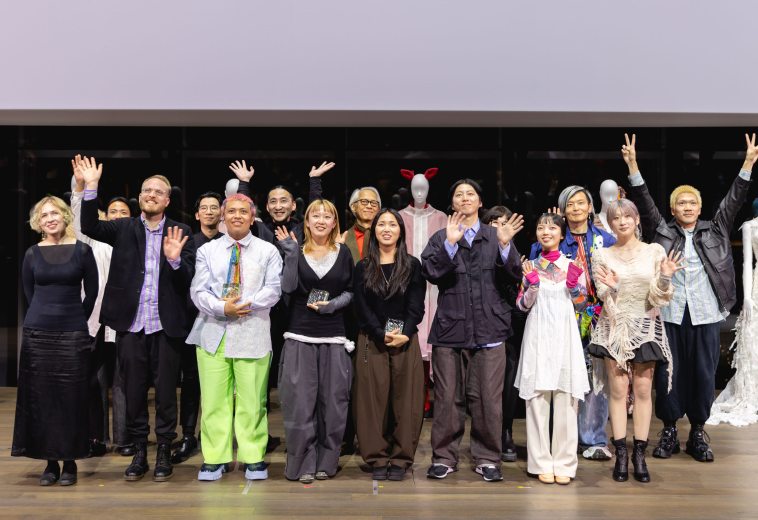
Lecture 9 was held, and we would like to introduce a part of the lecture and what the semifinalists learned/new perspectives they noticed.
Lecturer / Theme
Lecturer: Mr. Touma Chida(YKK CORPORATION Sustainability Department / Manager, Circularity Specialist)
Theme: “ “Little Parts. Big Difference.” in Circular Fashion”
Lecture Outline
Under the theme “Little Parts. Big Difference.”, the lecture highlighted the vital role that small components such as zippers can play in advancing circular fashion. Alongside an overview of YKK’s history and global operations, three key pillars for achieving a circular economy were introduced: environmentally conscious design, reuse, and recycling.
Examples included the use of recycled materials such as Natulon, plant-based innovations like GreenRise, plating technology that avoids harmful substances (AcroPlating), and water-saving dyeing methods (Eco-dye). The session also presented developments aimed at improving durability and repairability, as well as zipper and rivet designs that make disassembly easier and recycling more efficient.
The lecture concluded by returning to YKK’s founding philosophy, the “Cycle of Goodness”—the belief that prosperity comes from benefiting others—which was positioned as a guiding principle for building a truly circular society.
Key Points Learned
Some of the key points that were learned by the semi-finalists and last year’s winners who attended the course are listed below.
“What left the strongest impression on me was YKK’s corporate philosophy of ‘the cycle of goodness.’ Based on the belief that ‘no one prospers without rendering benefit to others,’ I deeply resonated with their commitment to creating a cycle in which consumers, the environment, and companies can all share in the benefits—through reducing environmental impact, building recycling systems, and designing for longevity.”
“I was impressed by the company’s stance of tackling environmental considerations, even though it increases costs and reduces short-term profits when making longer-lasting products.”
“From this lecture, I strongly realized that circularity starts at the design stage. The choice of materials and designs that account for repair and recycling determine most of a product’s environmental impact.”
“In my own project, I also want to create designs that are durable, repairable, and easily recyclable from the very beginning, with a focus on the entire lifecycle of the product.”
Many participants shared that what struck them most in Mr. Chida’s lecture was the realization that “zippers and rivets can become the very points where repair or disposal is decided,” and the statement that “up to 90% of a product’s lifecycle is determined at the design stage.” Concrete approaches such as detachable rivets, easily repairable zippers, and design strategies that extend product life were seen as powerful inspirations, with several participants expressing the desire to apply these ideas to their own work.
Others resonated deeply with YKK’s philosophy that “one cannot prosper without contributing to the benefit of others,” noting how it reframes materials not as mere components but as carriers of stories and sustainability.
Overall, the lecture provided both insight into the responsibility that large corporations can take on, and a valuable opportunity to reconsider the social role of design itself.
FOLLOW US
●○━━━━━━━━━━━━━━○●
We will continue to provide an overview of each lecture and what the semifinalists learned from it.
For the latest information, please follow us on FASHION FRONTIER PROGRAM’s Instagram.
▶︎▶︎FFP Instagram https://www.instagram.com/ffp.jp/